

How Home Tutors for Special Needs Children make a Learning difference?

How Home Tutors for Special Needs Children make a Learning difference? Understanding the Role of Home Tutors, Shadow Teachers for Autism, and Individual Education Plans (IEP) in Inclusive Learning at Home Every child learns in their own special way. Some children may understand lessons quickly in school, while others may need more time, repetition, and personal attention. In many Indian homes, parents may notice that their child struggles with reading, writing, focusing, remembering instructions, or managing their behaviour. These challenges may not always be clear at first. However, they could be linked to learning differences such as ADHD, dyslexia, or autism. In such case, qualified and trained home tutors for special needs children can be helpful. Generally, these learning differences are often misunderstood, and children may feel pressure, confusion, or even self-doubt. Additionally, parents may also feel worried and unsure about how to help. Therefore, understanding learning differences early can help support better learning and emotional well-being in the kids. Understanding Learning Differences in Children Learning differences do not mean that a child is weak or less capable. Instead, they show that the child’s brain processes information differently. Each child has strengths, even if learning looks different from others. For example, a child with ADHD may find it hard to sit still for long periods. They may get distracted easily or struggle to complete tasks. However, they may also be creative, energetic, and curious. A child with dyslexia may find it difficult to read, spell, or write. Still, they may be good at problem-solving or thinking visually. A child with autism may find communication or social interaction challenging, but they may be very focused or detail-oriented. Generally, school classrooms follow one teaching style. Hence, these children may find it difficult to learn or feel left behind. As a result, learning support from home tutors for special needs children that adapts to their needs can help them feel calmer, understood, and more capable. Why Some Children May Need Extra Learning Support In many Indian schools, classrooms are large and busy. Teachers work sincerely, but they may not always have enough time to support each child individually. Therefore, children with learning differences may not receive the attention they need during regular school hours. In addition, some children may feel shy or afraid to ask questions. They may worry about making mistakes or being judged by classmates. Over time, this can affect their confidence and interest in learning. Extra learning support for ADHD and dyslexia at home can give children a safe and quiet space. In this environment, children may feel more comfortable asking questions and expressing difficulties without fear. How Home Tutors Can Support Children with Learning Differences Home tutors teach children in their own homes. This environment often feels calm and secure. When children feel safe, learning may become easier and less stressful to them. A home tutor usually works with one child at a time. Because of this, lessons can move at a pace that suits the child. If a child needs more time to understand a topic, the tutor can slow down. If the child shows interest and confidence, the tutor can gently move forward to teach them. Furthermore, home tutors can also change teaching methods based on the needs of children. They may use pictures, simple stories, games, or hands-on activities. These methods can help children stay engaged and understand lessons better. With time, children may feel more confident about learning. Learning Support for Children with ADHD Children with ADHD often find it difficult to focus for long periods. They may feel restless or distracted during their classes. A home tutor can divide lessons into small and manageable parts. Short lessons can help children stay focused. In addition, short breaks between lessons may help the child relax and regain attention. Home tutors can also help children develop simple routines. These routines may support better focus over time. As a result, children may find it easier to manage schoolwork and daily activities. Learning Support for Children with Dyslexia Children with dyslexia generally struggle with reading, writing, and spelling. They may mix up letters or read slowly. Because of this, schoolwork may feel tiring or stressful. Furthermore, home tutors can use patient and gentle teaching methods to provide support to them. They may focus on phonics, reading aloud, repetition, and simple exercises. Lessons generally move slowly and clearly to help the child understand topics without pressure. With regular support, children may begin to feel more comfortable with reading and writing. Their confidence may improve slowly with the help of home tutors. Further, it can help reduce their fear related to learning and academics. Learning Support for Children with Autism Children with autism generally prefer routine and predictability during learning sessions. Sudden changes in schedule or teaching style may confuse or upset them. Therefore, a shadow teacher for autism follows a fixed routine that is suitable for the kids. This helps children know what to expect during each lesson. Moreover, tutors may also use visual aids, charts, or step-by-step instructions. In addition, tutors can help children practice basic communication skills. With time, children may feel more comfortable expressing their needs and feelings. This support can help both learning and daily life. Role of Shadow Teachers in Indian Schools In Indian schools, shadow teachers are becoming more common as awareness of inclusive education grows. Many parents choose shadow teachers to provide support to children with learning differences. Moreover, a shadow teacher may help a child sit calmly, follow classroom rules, and complete tasks. They may also explain lessons in simple words when needed. Because of this, children may feel more included and confident in school. Understanding Individual Education Plans IEPs An Individual Education Plan, or IEP, is a personalised learning plan designed for a child with learning differences. It focuses on the strengths of children and provides support when it is needed. An IEP sets clear learning goals for the learners. It also suggests teaching methods that suit the child. Because
Frequent Classroom Disruptions, Low Attention, or Sensory Overload? Could Your Child Need a Shadow Teacher for Autism?
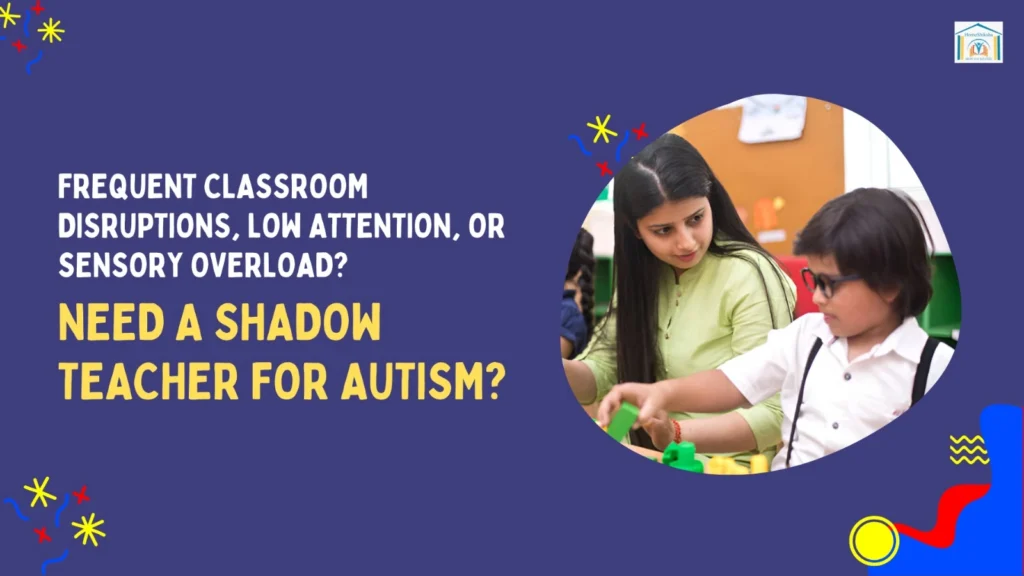
Frequent Classroom Disruptions, Low Attention, or Sensory Overload? Could Your Child Need a Shadow Teacher for Autism? Shadow teacher for autism provides one-on-one classroom support to help autistic children focus, learn, and adjust. They assist with behavior, sensory needs, and communication, ensuring inclusive education in regular schools. Autism Spectrum Disorder (ASD) affects how a child communicates, behaves, and processes information. In mainstream classrooms, children with autism often face challenges such as frequent meltdowns, difficulty following instructions, low attention span, or sensory overload. If these signs feel familiar, it may be time to consider whether your child needs a shadow teacher for autism. A shadow teacher offers dedicated one-on-one assistance to help autistic children adapt to inclusive classroom settings while supporting their emotional, behavioral, and academic growth. What Is a Shadow Teacher for Autism? A shadow teacher for autistic child is a trained professional who works closely with a student within a mainstream school. Their role is to ensure the child receives the attention and adaptations needed to learn effectively alongside their peers. What Is a Shadow Teacher for Autism? Aspect Details Role Provides individualized classroom support to autistic children Qualifications Trained in special education, autism intervention techniques, and IEP implementation Services Behavioral management, sensory regulation strategies, academic assistance Best For Children with autism needing consistent classroom support and adaptation Signs Your Child May Benefit from a Shadow Teacher for Autism Autistic children have a wide range of strengths and challenges. While not every child with autism needs a shadow teacher, here are some signs that indicate your child might benefit from one: If you notice these patterns, it’s essential to seek an evaluation and explore inclusive classroom support options. Benefits of a Shadow Teacher for Autistic Children A shadow teacher for autism helps bridge the gap between the general curriculum and the child’s unique learning needs. Here’s how they can support your child: Shadow teachers make inclusive education truly possible for autistic students, allowing them to thrive in a mainstream setting. Shadow Teacher vs. Special Educator What’s the Difference? While both roles are critical, they serve different purposes. Shadow Teacher vs. Special Educator What’s the Difference? Shadow Teacher Special Educator Supports the child within the classroom daily Works in pull-out or therapy sessions with a broader educational plan Provides real-time support and behavioral redirection Creates individualized education plans (IEPs) Helps implement immediate classroom accommodations Focuses on long-term academic and developmental goals Often, the best results are seen when both professionals collaborate. Shadow Teacher for Autism Key Responsibilities Shadow Teacher for Autism Key Responsibilities Responsibilities Examples Classroom Behavior Support Redirecting attention, reducing meltdowns, helping follow rules Academic Assistance Simplifying instructions, visual schedules, one-on-one teaching Communication Bridge Assisting child in understanding instructions and expressing needs Sensory and Emotional Regulation Recognizing sensory overload signs and helping the child calm down Collaboration with Teachers and Parents Sharing daily reports, strategies, and progress updates How to Find a Shadow Teacher for Autism Near You Finding the right autism shadow teacher takes careful consideration. Look for professionals who: You can explore options through: Qualifications to Look for in a Shadow Teacher for Autism Hiring the right support makes all the difference. Ideal qualifications include: If your child is experiencing frequent disruptions, difficulty focusing, or sensory overload in school, it’s worth exploring the possibility of hiring a shadow teacher for autism. With the right support, your child can participate confidently in a mainstream classroom, build social connections, and make steady academic progress. Let inclusive education work for your child, start by finding the right shadow teacher today. Shadow Teacher for Autism FAQs What is a shadow teacher for autism?A professional who provides consistent in-class support to autistic children, helping them learn, behave, and communicate better in inclusive settings. How does a shadow teacher help with autism? By offering one-on-one academic, behavioral, and sensory support tailored to the child’s needs. What’s the difference between a shadow teacher and a special educator?Shadow teachers support during classroom time, while special educators focus on therapy and long-term educational planning. Can I find a shadow teacher near me? Yes, platforms like HomeShiksha help connect parents with trained shadow teachers for autism near your location. Is it expensive to hire a shadow teacher for autism in India? Salaries typically range from ₹12,000 – ₹30,000 per month based on location and qualifications.