

Common Mistakes in Board Exams 2026 and How to Avoid Them
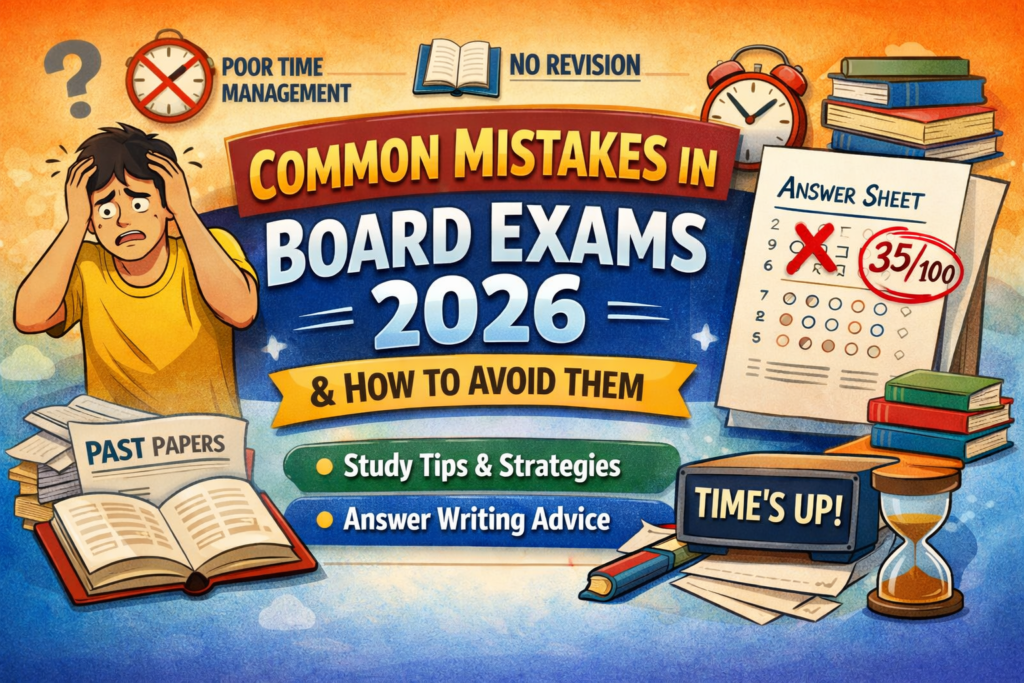
Common Mistakes in Board Exams 2026 and How to Avoid Them Simple Study Strategies and Helpful Tips to Avoid Common Mistakes in Board Exams 2026 Board exams are an important part of school life of a student. These exams can affect future study choices and sometimes even career plans of the learners. Students read their textbooks, attend classes, and revise their lessons to do well in these exams. However, even after studying a lot, some students do not get the marks they expected. Understanding Common Mistakes in Board Exams 2026 can help students prepare in a smarter way. When students know what mistakes to avoid, they can improve their study habits and exam approach. Why Students Should Know About Exam Mistakes Preparing for board exams is not just about finishing the syllabus. Students also need to plan their study time, revise what they have learned, and practice writing answers clearly for the exam. When students understand the Common Mistakes in Board Exams 2026, they can notice what might affect their performance. Learning about some of the common mistakes can help students: Not Following a Clear Study Plan One common mistake students make is studying without a clear plan. They may simply open their books and start reading different topics without deciding what to study first. When there is no study plan, some chapters may get too much attention while other chapters may be left unfinished. As the exam date gets closer, this can make students feel stressed because many topics are still left to cover. Students can divide their syllabus into small parts and decide what they will study each day. Furthermore, students who are looking for Board Exam Preparation Tips 2026 may find it helpful to follow a timetable that includes: Skipping Regular Revision Another mistake that many students make is that they delay their revision and start learning new topics. Some students focus mainly on finishing the syllabus and believe that they will revise everything just before the exam. Revision helps the mind remember important information. When students revise topics regularly, they can recall formulas, definitions, and key points more easily. Students preparing for Common Mistakes in Board Exams 2026 should try to revise topics several times. For example, they may revise a chapter a few days after studying it and then review it again after a week. Regular revision can help students feel more prepared and less stressed before exams. Memorizing Without Understanding the Topic Many students try to memorise answers exactly as they appear in their textbooks or notes. This method of exam preparation is not good, mainly in subjects that require understanding. In subjects like mathematics and science, students often need to apply concepts to solve questions. If they only memorise answers, they may find it difficult to answer questions that are slightly different. Students who want to understand how to Score Good Marks in Board Exams should try to understand the concept behind each topic. When students understand the topic clearly, they can explain it in their own words. They can take help from their teachers, friends, and learning videos to understand difficult concepts. Ignoring Previous Year Question Papers Some students read their textbooks many times but do not solve previous year question papers. This can be a missed opportunity because past papers show how exam questions are asked. Furthermore, solving previous question papers can help students understand the exam pattern. They can also see which topics appear frequently in exams. Practising these papers can help students notice Common Mistakes in Board Exams 2026, such as writing incomplete answers or spending too much time on one question. Students may try solving past papers within the same time limit as the actual exam. This practice can help improve the speed and confidence of the students. Poor Time Management During the Exam Many students feel that time passes quickly during board exams. They may spend too much time on a single question and later realise that they have little time left for the remaining questions. Therefore, students may follow a simple strategy for better time management in the board examinations: Writing Answers That Are Too Long or Unclear Some students believe that longer answers will bring more marks. However, long answers that do not clearly explain the topic may confuse the examiner. Students who follow Board Exam Answer Writing Tips should try to write answers that are simple and well-organised. They can use small paragraphs or bullet points to make answers easier to read. Further, a clear answer may include: Ignoring the Presentation of the Answer Sheet The way an answer sheet looks can also matter during exams. If handwriting is messy or answers are crowded together, it may be difficult for the examiner to read them. In addition, students should try to write neatly and leave enough space between answers. Also, important words or headings may be underlined to make them easier to notice. Furthermore, neat presentation can help examiners read answers comfortably. Students who want to improve how to Score Good Marks in Board Exams should remember that clear writing supports their knowledge. Studying for Too Many Hours Without Breaks Some students study for long hours without taking any breaks. They believe this will help them complete the syllabus faster. However, studying continuously can make the mind tired. Therefore, taking short breaks between study sessions can refresh the mind. Students may study for around forty minutes and then take a short break before continuing. Ignoring Health During Exam Preparation Students sometimes forget to take care of their health while preparing for exams. They may sleep late, skip meals, or sit for long hours without moving. Lack of sleep and poor eating habits can affect memory and concentration. When the body feels tired, studying may become harder. Students preparing for board exams should try to sleep properly, eat balanced meals, and drink enough water. Light exercise or walking during breaks can also help refresh the body. Final Words Board exams can feel difficult, but
CBSE Board Exams 2026 Exam Day Instructions: Complete Guidelines for Class 10 & 12 Students
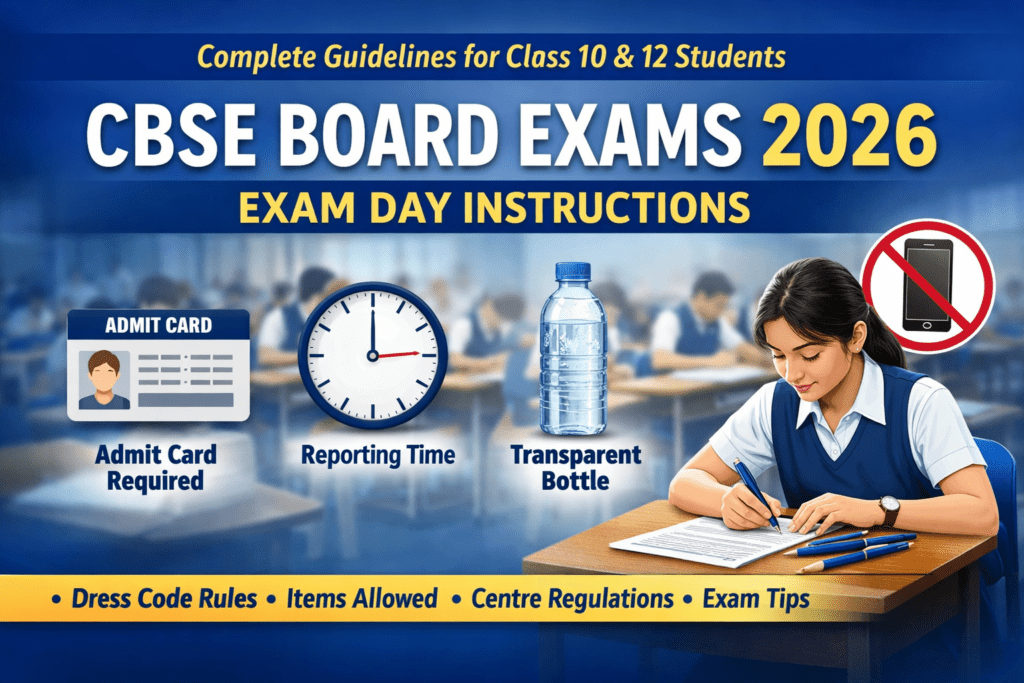
CBSE Board Exams 2026 Exam Day Instructions: Complete Guidelines for Class 10 & 12 Students CBSE Board Exams 2026 exam day instructions are essential for Class 10 and 12 students to avoid last-minute stress and follow all official rules properly. Students must carry their admit card and school ID, reach the exam centre on time, use a blue or royal blue ballpoint pen, follow the transparent bottle rule CBSE 2026, and avoid restricted items like mobile phones and smartwatches. By understanding reporting time, dress code, items allowed, and centre guidelines, students can enter the exam hall confidently and focus fully on performing their best. Learning about the CBSE Board Exams 2026 exam day instructions is very important for every student who is going to appear for the Class 10 and Class 12 board exams. If you are preparing for the exams, you should not only focus on revision but also understand the rules you should follow at the exam centre. The Central Board of Secondary Education (CBSE) has released clear instructions regarding items allowed in the exam hall, reporting time, dress code, and required documents. Students and parents should read these guidelines carefully so that they can avoid stress at the last moments before the exam. In this article, you will find all the important details about CBSE Class 10th Board Exams 2026 guidelines. Also, you will be able to learn about CBSE Class 12th Board Exams 2026 guidelines and exam day rules in simple language here. Why Are CBSE Board Exams 2026 Exam Day Instructions Important Board exams play an important role in the academic journey of a student. Class 10 marks may help in choosing a stream, and Class 12 marks can help students find college admissions and competitive exam eligibility. However, even if you prepare well, you may face issues if you ignore the official CBSE Board Exams 2026 exam day instructions. Therefore, students should understand what they can carry, what they should avoid, and how they must behave at the exam centre. Furthermore, following the exam day rules can help you: CBSE Class 10th Board Exams 2026 Guidelines The CBSE Class 10th Board Exams 2026 guidelines clearly mention the documents and items a student should carry to the exam centre. 1. Admit Card Is Mandatory Students are required to carry their CBSE 2026 admit card instructions seriously. You should bring the original admit card issued by your school. Without it, you may not be allowed to enter the exam hall. 2. Reporting Time The CBSE board exam reporting time 2026 is very important. Students should reach the exam centre at least 30 minutes before the reporting time mentioned on the admit card. If you arrive late at the exam centre, you may not get entry. Therefore, you should plan your travel to the examination centre in advance to find entry without any hassle CBSE Class 12th Board Exams 2026 Guidelines The CBSE Class 12th Board Exams 2026 guidelines are similar to Class 10 but it may include subject-specific instructions. Since Class 12 exams are important for higher education, students should not take any risk with exam centre rules. Further, class 12 students should follow the given guidelines: CBSE Board Exams 2026 Exam Day Instructions to be Followed Let us now look at the detailed CBSE Board Exams 2026 exam day instructions that every student should follow. Students often feel confused about what they can carry. According to the official guidelines, the following items allowed in CBSE board exam 2026 may include: Transparent Bottle Rule CBSE 2026 The transparent bottle rule CBSE 2026 clearly states that students can carry only a transparent water bottle inside the exam hall. Moreover, you should not bring the following items to the examination hall: Pen to Use in CBSE Board Exams 2026 Many students ask about the pen to use in CBSE Board Exams 2026. It is better to carry two or three working pens to avoid any problem during the exam. You should use a blue or royal blue ballpoint pen. Furthermore, you should avoid: CBSE Exam Centre Rules 2026 The CBSE exam centre rules 2026 are strict, and students must follow them carefully. Here are the important rules to be followed by class 10 and class 12 students: CBSE 2026 Admit Card Instructions The CBSE 2026 admit card instructions mention that students should: You should keep the admit card safe until all exams are over. After entering the exam hall, you may need to sign the attendance sheet. Make sure you sign correctly. CBSE Board Exam Dress Code Guidelines The CBSE board exam dress code guidelines are simple but these rules are important to be followed. Further, students should wear: Moreover, students should avoid: What Students Should Do on Exam Day Apart from official rules, students should follow some basic steps to stay calm and confident in the examination hall: 1. Sleep Well Before the Exam You should sleep on time the night before the exam. Proper rest may help you think clearly during the paper. 2. Eat Light and Healthy Food You can eat light food before leaving for the centre. Heavy meals may cause discomfort. 3. Read Question Paper Carefully When you receive the paper, you should first read all instructions. CBSE usually gives 15 minutes to read the question paper. Use this time wisely. 4. Manage Time Properly You should divide time for each section. If a question seems difficult, you may skip it and return later. Further, time management can help you complete the paper without stress. Mistakes to Avoid During CBSE Board Exams 2026 Students should avoid common mistakes that may affect their performance. Final Checklist Before Leaving for the Exam Centre Before stepping out to write the Board examinations, students should check the following items in their bags: The CBSE Board Exams 2026 exam day instructions are not difficult to follow. However, students must read them carefully and act responsibly. Whether you are appearing for Class 10 or Class 12, you should
How Home Tutors for Special Needs Children make a Learning difference?

How Home Tutors for Special Needs Children make a Learning difference? Understanding the Role of Home Tutors, Shadow Teachers for Autism, and Individual Education Plans (IEP) in Inclusive Learning at Home Every child learns in their own special way. Some children may understand lessons quickly in school, while others may need more time, repetition, and personal attention. In many Indian homes, parents may notice that their child struggles with reading, writing, focusing, remembering instructions, or managing their behaviour. These challenges may not always be clear at first. However, they could be linked to learning differences such as ADHD, dyslexia, or autism. In such case, qualified and trained home tutors for special needs children can be helpful. Generally, these learning differences are often misunderstood, and children may feel pressure, confusion, or even self-doubt. Additionally, parents may also feel worried and unsure about how to help. Therefore, understanding learning differences early can help support better learning and emotional well-being in the kids. Understanding Learning Differences in Children Learning differences do not mean that a child is weak or less capable. Instead, they show that the child’s brain processes information differently. Each child has strengths, even if learning looks different from others. For example, a child with ADHD may find it hard to sit still for long periods. They may get distracted easily or struggle to complete tasks. However, they may also be creative, energetic, and curious. A child with dyslexia may find it difficult to read, spell, or write. Still, they may be good at problem-solving or thinking visually. A child with autism may find communication or social interaction challenging, but they may be very focused or detail-oriented. Generally, school classrooms follow one teaching style. Hence, these children may find it difficult to learn or feel left behind. As a result, learning support from home tutors for special needs children that adapts to their needs can help them feel calmer, understood, and more capable. Why Some Children May Need Extra Learning Support In many Indian schools, classrooms are large and busy. Teachers work sincerely, but they may not always have enough time to support each child individually. Therefore, children with learning differences may not receive the attention they need during regular school hours. In addition, some children may feel shy or afraid to ask questions. They may worry about making mistakes or being judged by classmates. Over time, this can affect their confidence and interest in learning. Extra learning support for ADHD and dyslexia at home can give children a safe and quiet space. In this environment, children may feel more comfortable asking questions and expressing difficulties without fear. How Home Tutors Can Support Children with Learning Differences Home tutors teach children in their own homes. This environment often feels calm and secure. When children feel safe, learning may become easier and less stressful to them. A home tutor usually works with one child at a time. Because of this, lessons can move at a pace that suits the child. If a child needs more time to understand a topic, the tutor can slow down. If the child shows interest and confidence, the tutor can gently move forward to teach them. Furthermore, home tutors can also change teaching methods based on the needs of children. They may use pictures, simple stories, games, or hands-on activities. These methods can help children stay engaged and understand lessons better. With time, children may feel more confident about learning. Learning Support for Children with ADHD Children with ADHD often find it difficult to focus for long periods. They may feel restless or distracted during their classes. A home tutor can divide lessons into small and manageable parts. Short lessons can help children stay focused. In addition, short breaks between lessons may help the child relax and regain attention. Home tutors can also help children develop simple routines. These routines may support better focus over time. As a result, children may find it easier to manage schoolwork and daily activities. Learning Support for Children with Dyslexia Children with dyslexia generally struggle with reading, writing, and spelling. They may mix up letters or read slowly. Because of this, schoolwork may feel tiring or stressful. Furthermore, home tutors can use patient and gentle teaching methods to provide support to them. They may focus on phonics, reading aloud, repetition, and simple exercises. Lessons generally move slowly and clearly to help the child understand topics without pressure. With regular support, children may begin to feel more comfortable with reading and writing. Their confidence may improve slowly with the help of home tutors. Further, it can help reduce their fear related to learning and academics. Learning Support for Children with Autism Children with autism generally prefer routine and predictability during learning sessions. Sudden changes in schedule or teaching style may confuse or upset them. Therefore, a shadow teacher for autism follows a fixed routine that is suitable for the kids. This helps children know what to expect during each lesson. Moreover, tutors may also use visual aids, charts, or step-by-step instructions. In addition, tutors can help children practice basic communication skills. With time, children may feel more comfortable expressing their needs and feelings. This support can help both learning and daily life. Role of Shadow Teachers in Indian Schools In Indian schools, shadow teachers are becoming more common as awareness of inclusive education grows. Many parents choose shadow teachers to provide support to children with learning differences. Moreover, a shadow teacher may help a child sit calmly, follow classroom rules, and complete tasks. They may also explain lessons in simple words when needed. Because of this, children may feel more included and confident in school. Understanding Individual Education Plans IEPs An Individual Education Plan, or IEP, is a personalised learning plan designed for a child with learning differences. It focuses on the strengths of children and provides support when it is needed. An IEP sets clear learning goals for the learners. It also suggests teaching methods that suit the child. Because
Career Counselling After Class 10: Stream Selection Guide for Students & Parents

Choosing a stream after Class 10 is one of the earliest and most important academic decisions in the life of a student. At this age, students are still learning about their interests and abilities. At the same time, parents want their child to make a choice that is safe and meaningful. Because of this, many families experience confusion and stress to select their stream. Further, students may feel unsure, while parents may worry about future career options. This is where career counselling after Class 10 becomes useful. It helps both students and parents understand choices clearly and move forward with confidence. In this article, we explain stream selection in a very simple way. We will discuss Science, Commerce, Arts, skill-based alternatives, the role of parents, and common myths. Why Career Counselling After Class 10 Is Important After Class 10, students are asked to choose a stream that often decides their next academic steps. However, many students do not yet know what they truly enjoy or where their strengths lie. As a result, they make decisions in a hurry or under pressure. Additionally, career counselling helps bring clarity at this stage. It focuses on understanding the student rather than forcing a decision. It also helps parents see different options with an open mind. Further, career counselling after Class 10 is helpful because it: Understanding Stream Selection After Class 10 Stream selection simply means choosing a group of subjects for higher secondary studies. In most schools, students choose from three main streams. Each stream has its own learning style and future paths. It is important to understand that no stream is good or bad. The right stream is the one that matches the student’s interest, ability, and comfort level. The three main streams are Science, Commerce, and Arts. Science Stream The Science stream is often chosen by students who like understanding how things work. It includes subjects such as Physics, Chemistry, Mathematics, and Biology. Some students can also choose computer-related subjects with Science. Further, Science requires regular study and patience. It is suitable for students who enjoy learning through concepts, experiments, and problem-solving. Before choosing Science, students should honestly think about their interests and learning habits. It is better for the students to choose Science because of interest, not because of pressure. Furthermore, students who choose Science can choose career options like: Commerce Stream Commerce is a good option for students who are interested in learning business, money, and management. This stream focuses on understanding how organisations, markets, and finances work. Additionally, subjects in Commerce generally include Accountancy, Business Studies, Economics, and sometimes Mathematics. The learning style in the Commerce stream is a mix of theory and practical understanding. Furthermore, Commerce suits students who enjoy planning, organising, and analysing information. It also offers flexibility in higher studies. After choosing Commerce, students can explore careers such as: Arts Stream Arts is often misunderstood as a weak option or a stream for weaker students, but this is not true. The Arts stream focuses on understanding society, people, ideas, and culture. It helps students develop strong thinking and communication skills. Subjects in Arts may include History, Geography, Political Science, Psychology, Sociology, and Languages. The learning style is more flexible and based on discussions. Additionally, Arts is suitable for students who enjoy reading, writing, thinking, and understanding social issues. It helps students to explore many fields in higher education. Students from the Arts can choose careers in: Skill-Based Alternatives After Class 10 Not every student feels comfortable with traditional classroom learning. Some students prefer practical skills and hands-on work. For such students, skill-based courses can be a good option to pursue after completion of their class 10. Today, many skill-based programs are designed to prepare students for real-world work. These courses focus on learning by doing rather than only reading textbooks. Skill-based options are helpful for students who want early work exposure or practical training. Some popular skill-based alternatives include: Role of Parents in Stream Selection After Class 10 Parents play a very important role in stream selection. Their support, understanding, and patience can make the process smoother for students. Many students feel pressure when they think they might disappoint their parents. Instead of deciding on behalf of the child, parents can guide them with care. Moreover, open conversation between parents and children is more helpful than strict rules. Hence, parents can support their child by: Common Myths About Stream Selection After Class 10 Many families believe certain things about stream selection that are not completely true. These myths often create unnecessary fear and pressure. Understanding the reality behind these beliefs can help families make better choices. Some common myths include: When Should You Consider Career Counselling? Career counselling is useful at different points, not only when there is a problem. It can help students who are confused as well as those who want confirmation. Early guidance often prevents stress and regret later. Furthermore, career counselling may be helpful if: Final Thoughts Choosing a stream after Class 10 is an important step, but it does not decide everything in life. What matters more is choosing a path that matches the student’s interests and comfort. Career counselling after Class 10 helps students and parents understand options calmly. It reduces confusion and builds confidence. With the right guidance, stream selection becomes a positive and meaningful experience. Career Counselling After Class 10 FAQs Is Science the best stream after Class 10? No stream is best for everyone. The right stream depends on the student’s interest, learning style, and comfort with subjects. Can a student change their stream later? Yes, in many cases students can change streams or career paths later with proper planning and guidance. Are skill-based courses a good option after Class 10? Yes, skill-based courses are helpful for students who prefer practical learning and want early career exposure. How can parents support their child during stream selection? Parents can listen patiently, avoid pressure, and encourage open discussion instead of making comparisons. When should career counselling be
How to Become a Remedial Teacher: Training, Certification, Salary & Career Growth
How to Become a Remedial Teacher: Training, Certification, Salary & Career Growth Remedial Teacher careers involve supporting children with learning gaps through personalised methods. Graduation with a remedial teacher training certification is sufficient, B.Ed is optional, and roles include home tutor, shadow teacher, or online educator. Salaries in India vary by subject, experience, and location, with steady long-term career growth. Becoming a Remedial Teacher is often a thoughtful career choice rather than a quick decision. Many people enter this field because they enjoy working closely with children and want to support learners who need a little extra help. In the recent years, awareness around learning differences among kids has grown. Therefore, the demand for trained remedial educators, shadow teachers, and special educators has increased. If you want to opt for teaching as a career, looking for a remedial educator for my child, or searching for a suitable remedial teacher training course, this guide will help you. It can help you understand the role, required qualifications, earning potential, and future opportunities in a clear and practical way. Who Is a Remedial Teacher? A remedial teacher works with children who face challenges in learning at the same pace as their peers. These challenges may be academic, behavioural, or developmental in nature. Instead of following a standard classroom learning method, these teachers focus on personalised teaching methods based on each need of the child. Because of this individualised approach, parents often search online for support using terms like special educator for my child or shadow educator for my child. Generally, a shadow teacher supports students who experience: Eligibility to Become a Remedial Teacher One of the important aspects of choosing to become a shadow teacher is that it is open to people from different educational backgrounds. Basic Eligibility Norms to Become a Remedial Teacher In many cases, you can begin your journey as a shadow teacher if you have: Preferred Qualifications to Become a Shadow Teacher Many homemakers, fresh graduates, and career changers can start with a teacher training course and build experience to educate specially-abled children. While not always mandatory, having the following qualifications can be helpful for you to get the job easily: Steps for How to Become a Remedial Teacher There are no confirm steps to become a remedial or shadow teacher. However, if you are interested to become a shadow teacher, you can follow the given steps. Step 1: Learn About Learning Differences Before enrolling in any course, becoming aware of the learning difference helps to understand common learning challenges and how they affect children academically and emotionally. Step 2: Join a Teacher Training Course A good certification course for teacher program generally covers learning assessments, lesson planning, behaviour management, and teaching strategies. Step 3: Complete Certification A certified remedial teacher program adds credibility and helps parents and schools feel more confident about your skills. Organisations like Homeshiksha provides certifications and trainings for the interested candidates who want to become a shadow teacher. Step 4: Gain Practical Experience Many beginners start as shadow teachers or assistant educators to gain hands-on experience. You can also try this to understand the psychology and abilities of children. Step 5: Start Teaching After proper training, you can work as a home tutor, school-based remedial teacher, online educator, or shadow teacher. Remedial Teacher and Shadow Teacher: Understanding the Difference Although the roles are related, they are not the same. A remedial teacher focuses mainly on improving academic and learning skills through individual sessions. A shadow teacher, on the other hand, supports a child inside the classroom, helping them follow instructions and stay engaged. Further, many educators choose to complete both training programs to expand their opportunities. Online vs Offline Remedial Teaching, Which is Better? Offline teaching usually takes place at the home or school of the children. It allows for direct interaction and is often preferred for younger children or those who need close supervision. Furthermore, online remedial teaching offers flexibility and allows teachers to reach students across cities. While it requires basic technical skills, it works well for older children and concept-based learning. In practice, many remedial teachers choose a combination of both. Expected Home Tutor Salary in India 2026 The income of a remedial teacher can vary based on experience, subject, and location. However, you can expect the following salary ranges: Subject-Wise Monthly Earnings City-Wise Earnings How to Become a Home Tutor in India Many remedial teachers work as home tutors, especially for personalised learning support. Eligibility Graduation, subject knowledge, and a recognised teaching certification are usually sufficient. Registration Process After completing training, you can create a tutor profile and register with verified platforms. Furthermore, you can apply as a Tutor at HomeShiksha to connect with parents looking for qualified educators. Summer Camp Opportunities for Remedial Teachers A summer camp for kids offers a different but valuable teaching experience. These camps often focus on skill-building, confidence development, and learning readiness rather than exams. For remedial teachers, summer camps provide both additional income and practical exposure. Online Teaching vs Home Tuition: A Simple Comparison Online teaching offers flexibility and wider reach, while home tuition allows for deeper engagement and routine. Further, teachers who balance both formats often find it easier to manage income and workload. Common Mistakes New Remedial Teachers Make Some beginners skip proper training, while others apply the same method to every child. Another common issue is underpricing services or not communicating regularly with parents. Being mindful of these points can help build trust and long-term success. Career Growth for Remedial Teachers With experience and additional qualifications, remedial teachers may move into roles such as special educators, trainers, coordinators, or consultants. Demand for trained professionals continues to grow across schools and learning centres. Remedial Teacher FAQs Do I need a B.Ed to become a remedial teacher?A B.Ed is helpful but not compulsory. Many remedial teachers begin with a graduation degree and complete a recognised remedial teacher training course to build skills and credibility. How long does a remedial teacher training
How to Choose the Right Home Tutor
How to Choose the Right Home Tutor? Home tutors can make learning feel easier and more comfortable for children. Choosing the right tutor at home is not only about improving academic marks. Many parents look for home tuition when their child needs extra help, personal attention, or a comfortable way of learning. Home Tutor selection generally comes into focus when parents notice their child needing extra academic support or confidence. While schools provide systematic learning, not every child is able to keep up with classroom speed. Because of this, doubts can remain unclear and slowly affect performance. A home tuition can help students by offering them personal attention, flexible teaching methods, and a familiar environment. As a result, children feel more relaxed, ask questions freely, and understand lessons better with time. Home Tutor vs Coaching Institute It is a good thing to compare a home tutor with a coaching institute before making a decision for children. Coaching institutes follow a fixed schedule and group-based teaching methods. On the other hand, home tuitions focus on one child at a time. In addition, tuition at home reduces travel stress and allows parents to stay involved in the progress of their child. Parents can also explore trusted Home Tutor Services like HomeShiksha to find suitable tutors easily. Further, the following points can help parents learn more about home tuitions and coaching institutes: Home Tuition vs Coaching Institute Factors Home Tutor Coaching Institute Learning Style Personalised teaching Group-based learning Attention One-to-one focus Shared among students Comfort & Safety Learning at home Travel and crowd exposure Cost vs Value Learning-focused value Fixed package pricing Parent Involvement Easy to monitor Limited interaction Flexibility Adjustable timings Fixed schedules How to Choose the Right Home Tutor for Your Child Finding the right tutor at home becomes easier when parents focus on how comfortable the child feels while studying. A good tutor explains lessons slowly, listens to doubts, and changes teaching style if needed. Further, here is how you can check whether a tutor is suitable for your child or not: Checking the qualifications of the tutor A home tuition teacher should have good subject knowledge along with the ability to explain clearly to the students. However, qualifications are more effective when paired with good explanation skills and a calm teaching approach. You can check the following points to check the ability of the tutor: Subject-Wise Tutor Selection Each subject has its own learning style, and the right home tutor understands these differences. Therefore, choosing tutors based on subject needs often supports better learning progress. For example, they can consider a logical explanation of concepts with regular practice for Maths and Science. For Languages, they should check for a balanced focus on reading, writing, and speaking. Opt for a Trial Class A trial class can give parents and children a practical idea of how home tuition sessions will feel. It also helps parents observe the comfort levels of the tutor and student before continuing for the long term. Taking trial classes can help parents notice: Red Flags Parents Should Avoid Many tutors are dedicated, clear, and proficient in teaching their subjects. However, not every tutor suits every child. There can be many psychological and emotional reasons behind this. Further, paying attention during early sessions helps parents make informed decisions. Additionally, these are the signs that parents should keep in mind while hiring a tuition teacher: Questions Parents Can Ask Before Hiring Open conversations between the parent, tutor, and child can help build trust in tuition at home arrangements. Asking a few simple questions helps set clear expectations for tuition at home. Further, here are a few examples parents can ask to the tutor: How Home Tuition Solves the Top Reasons Students Struggle in School Many students face learning challenges due to limited attention, unclear concepts, or emotional stress at school. Home tuition can help resolve these issues by creating a relaxed and focused learning environment where children feel comfortable asking questions. Lack of Attention in Classrooms In large classrooms, some children hesitate to speak or ask questions. A home tutor provides individual attention that allows students to stay engaged. Here, a home tuition supports learning by focusing on one child, adjusting lesson speed, encouraging questions, and improving confidence of the learner. Exam Fear Exam-related stress can affect performance even when students understand the subject. A tutor at home helps children prepare gradually and calmly. Learning at home through tuitions can help students practice tests in a comfortable environment. Also, home tuition teachers can clearly explain to them the actual exam pattern. Weak Fundamentals When basics are unclear, advanced topics often feel confusing. Home tuition focuses on revisiting basic concepts, using practical examples, and breaking topics into smaller steps. Learning Gaps After COVID Years Many students still feel the impact of learning interruptions from past years. Online tuition, along with home tutors, can help rebuild the learning routines of the students in a comfortable environment. They can create personalised learning plans. Students can use both online and offline resources to cover their syllabus. Benefits of Home Tutor for Different Grades of Students Parents should be aware that the learning needs of the students change with age, and a home tutor adapts teaching methods to match each academic stage. Primary Classes (1-5) At this stage, children benefit from encouragement and habit-building. Here, a home tuition helps students by improving their reading and writing skills, enhancing curiosity levels, supporting attention development, and improving basic understanding. Middle School (6-8) From classes 6 to 8, subjects generally become more detailed, and confusion may begin to appear. Here, home tuitions can help learners by clear explanation of concepts, building study routines, and confidence. Secondary Classes (9-10) Classes 9 and 10 students require systematic guidance to improve their time management and syllabus-based learning. As their board exam preparation begins, they need regular assessments and motivation, which is possible with the help of a home or online tutor. Senior Secondary Classes (11-12) The academic performance of
Why Do Students Struggle in School? Key Reasons, Solutions
Why Do Students Struggle in School? Key Reasons, Solutions Why do students struggle in school? Common reasons include lack of attention in classrooms, exam fear, weak academic foundations, learning gaps, and limited personalised support. Understanding these challenges helps parents and educators choose effective solutions like one-to-one home tuition to improve student performance in school. Why do students struggle in school despite having access to schools, textbooks, and digital learning tools? This question concerns parents, teachers, and education experts across India and globally. The reality is that modern classrooms are not designed to address individual learning needs, which leads many students to fall behind academically and emotionally. Students today face multiple academic and psychological pressures from overloaded syllabi and competitive exams to post-pandemic learning gaps. Understanding why students face learning difficulties is the first step toward providing timely and effective support. Why Do Students Struggle in School? An Overview Students may struggle in school due to a combination of academic, emotional, environmental, and systemic factors. These struggles are not a reflection of intelligence or potential but rather misalignment between teaching methods and individual learning needs. Below is an overview of the most common academic problems faced by students today: Why Do Students Struggle in School? An Overview Key Challenge Impact on Students Lack of attention in classroom Poor concept clarity, disengagement Exam fear in school students Anxiety, low confidence, poor performance Weak academic foundation Difficulty understanding advanced topics Learning gaps Incomplete syllabus coverage, skill loss Limited individual support Unanswered doubts, slow progress Major Reasons Students Struggle in School Understanding the major reasons students struggle in school helps parents and educators identify problems early and take corrective action. These challenges often stem from classroom limitations, emotional pressure, and learning gaps that gradually affect a student’s academic confidence and performance. Below are the most common and research-backed reasons students face learning difficulties today. 1. Lack of Attention in Classroom One of the most common reasons students struggle in school is the lack of individual attention. In classrooms with 30–50 students, teachers cannot cater to every learner’s pace or doubts. Some students learn visually, others need repetition, and some require hands-on explanation. When these needs are not met, students slowly disengage, leading to confusion and poor academic outcomes. 2. Exam Fear in School Students Exam fear in school students is a growing concern. Continuous assessments, board exam pressure, and comparison with peers often create anxiety and self-doubt. This fear affects: Over time, exam fear can result in underperformance even when the student has prepared well. 3. Weak Academic Foundation A weak academic foundation especially in subjects like Maths, Science, and Languages creates long-term learning difficulties. When basic concepts are not clear, students struggle to understand advanced topics. This is one of the most overlooked academic problems faced by students, as gaps often go unnoticed until exams reveal poor results. 4. Learning Gaps in Students Learning gaps in students remain a significant challenge even years after schools reopened. Online classes during the pandemic led to: Many students progressed to higher classes without mastering previous concepts, making current studies more difficult. 5. Why Students Face Learning Difficulties Beyond Academics Apart from academics, students may face learning difficulties due to: These factors contribute silently but significantly to why students struggle in school. How Home Tuition Helps Struggling Students Understanding how home tuition helps struggling students is crucial when school support alone is not enough. Key One-to-One Home Tuition Benefits One-to-one home tuition benefits students who need customised attention that schools cannot provide. Solutions for Weak Academic Foundation Effective solutions for weak academic foundation focus on concept clarity rather than memorisation. These include: With the right guidance, even students who are far behind can regain confidence and academic strength. How to Improve Student Performance in School If parents are wondering how to improve student performance in school, the answer lies in a balanced approach: Improvement is gradual but sustainable when learning becomes student-centric rather than syllabus-centric. Why Do Students Struggle in School? FAQs Why do students struggle in school even after regular attendance? Regular attendance does not guarantee understanding. Many students face learning difficulties due to lack of attention in classrooms and weak conceptual foundations. What are the main reasons students struggle in school today? Key reasons include exam fear, learning gaps, limited personalised teaching, and academic pressure. How home tuition helps struggling students academically? Home tuition provides one-to-one attention, customised teaching, and focused revision, helping students overcome learning gaps effectively. Are learning gaps in students still affecting performance? Yes. Many students continue to face foundational gaps due to disrupted learning during the pandemic years. What are the best solutions for weak academic foundation? Rebuilding basics, personalised teaching, regular assessments, and concept-focused learning are the most effective solutions. How can parents improve student performance in school long-term? By reducing pressure, encouraging consistency, and choosing personalised learning options like home tuition. So, why do students struggle in school? The answer lies in a combination of systemic limitations, emotional pressures, and individual learning needs that traditional classrooms cannot always address. Recognising these challenges early—and responding with personalised solutions can transform a student’s academic journey. With the right support system, clear concepts, and confidence-building strategies, every student can improve performance and rediscover their potential. At HomeShiksha, we believe no student should be left behind due to lack of attention, fear, or learning gaps. The right guidance at the right time makes all the difference. If you feel your child needs personalised academic support and you need a tutor who understands individual learning needs, HomeShiksha connects you with the right expert at the right time.
Top 5 Reasons to Hire a Private Home Tutor in Kolkata

Top 5 Reasons to Hire a Private Home Tutor in Kolkata Private Home Tutor in Kolkata helps students achieve better academic results through personalised one-to-one learning, flexible schedules, experienced subject experts, focused exam preparation, and improved confidence. Home tuition in Kolkata ensures customised attention that classroom learning often cannot provide. Private Home Tutor in Kolkata has become a preferred choice for parents who want personalised academic support for their children. With growing competition across CBSE, ICSE, ISC, and State Board schools, students need focused guidance beyond crowded classrooms. Home tuition in Kolkata offers individual attention, concept clarity, and a learning pace tailored to each student’s needs, making it an effective solution for consistent academic improvement. Why Home Tuition in Kolkata Is Gaining Popularity Kolkata is known for its strong academic culture, but increasing syllabus complexity and competitive exams have made learning more challenging. Schools often follow a fixed pace, leaving little room for individual doubt resolution. This is where a private tutor in Kolkata bridges the learning gap by offering customised teaching strategies, regular assessment, and continuous mentoring at home. Reasons Why Hire a Private Home Tutor in Kolkata Hiring a private home tutor in Kolkata has become a preferred choice for parents who want focused academic support for their children. With personalized attention, flexible learning schedules, and expert guidance, home tuition in Kolkata helps students achieve better understanding, confidence, and consistent academic growth. Here are the reasons why one should hire a private home tutor in Kolkata: 1. Personalised One-to-One Learning Experience A personal tutor for students in Kolkata focuses solely on one student, unlike classrooms where teachers manage many learners at once. This personalised approach allows tutors to understand the student’s strengths, weaknesses, and learning style, resulting in faster progress and stronger conceptual understanding. 2. Better Academic Performance and Concept Clarity With a private home tutor in Kolkata, lessons are tailored to clear doubts immediately. Tutors can revise difficult topics multiple times, use practical examples, and ensure the student fully understands concepts, leading to better exam scores and long-term learning. 3. Flexible Schedule and Comfortable Learning Environment Home tuition in Kolkata offers flexibility in timing, allowing students to study without stress. Learning at home creates a comfortable environment where students feel confident to ask questions, concentrate better, and learn at their own pace. 4. Experienced and Subject-Specific Tutors The best private home tutor in Kolkata is often a subject expert with experience in handling different boards and exam patterns. Whether it is Maths, Science, Commerce, or Languages, subject-specific tutors provide focused preparation aligned with the student’s syllabus and academic goals. 5. Improved Confidence and Motivation Regular guidance from a private tutor in Kolkata helps students overcome fear of exams and subjects. Continuous encouragement, performance tracking, and positive feedback boost confidence, discipline, and motivation—key factors for academic success. Who Can Benefit from a Personal Tutor for Students in Kolkata? How to Choose the Best Private Home Tutor in Kolkata When selecting home tuition in Kolkata, consider: Private Home Tutor in Kolkata FAQs Is hiring a private home tutor in Kolkata worth it? Yes. A private home tutor provides personalised attention, flexible learning, and focused guidance, leading to better academic performance. Which classes can benefit from home tuition in Kolkata? Students from primary to senior secondary levels, across all boards, can benefit from home tuition. How is a private tutor different from coaching centres? A private tutor in Kolkata focuses on individual learning needs, unlike coaching centres that follow a fixed teaching pace for large groups. Are home tutors suitable for weak students? Absolutely. Personal tutors help weak students improve gradually by strengthening basics and building confidence. Can I get subject-specific home tuition in Kolkata? Yes. You can hire subject-specific tutors for Maths, Science, English, Commerce, and more. Hiring a private home tutor in Kolkata is a smart academic investment for parents who want personalised education, better results, and stress-free learning for their children. With expert guidance, flexible schedules, and focused attention, home tuition in Kolkata supports consistent academic growth and confidence building. 👉 Looking for a trusted and experienced personal tutor in Kolkata? HomeShiksha helps you connect with verified and qualified home tutors tailored to your child’s learning needs.
Top 5 Reasons to Hire a Private Home Tutor in Ghaziabad
Top 5 Reasons to Hire a Private Home Tutor in Ghaziabad Private Home Tutor in Ghaziabad offers personalised one-to-one learning, subject-specific guidance, flexible study schedules, and a safe home-based environment. It helps students strengthen concepts, improve academic performance, and gain confidence with consistent progress tracking. Private Home Tutor in Ghaziabad is becoming an increasingly popular choice among parents who want personalised, reliable, and result-oriented academic support for their children. With rising academic competition and limited individual attention in schools, many students struggle to keep up with concepts, homework, and exam preparation. Hiring a private tutor in Ghaziabad ensures one-to-one guidance, structured learning plans, and continuous performance monitoring in a comfortable home environment. Whether a student needs subject-specific help or overall academic improvement, home tuition in Ghaziabad offers flexibility, focused teaching, and a distraction-free learning experience that leads to better understanding, confidence, and consistent academic growth. Why Private Home Tuition in Ghaziabad is in High Demand A Private Home Tutor in Ghaziabad has become an essential academic support system for students facing increasing competition, syllabus pressure, and limited classroom attention. Schools often follow a fixed teaching pace, which may not suit every learner. As a result, many students struggle with concept clarity, homework completion, and exam preparation. Hiring a private tutor in Ghaziabad ensures personalised teaching, regular academic monitoring, and structured learning plans tailored to the student’s needs. Whether your child requires help in specific subjects or overall academic improvement, home tuition in Ghaziabad provides focused guidance in a comfortable and distraction-free environment. Here we explain the Top 5 Reasons to Hire a Private Home Tutor in Ghaziabad, along with benefits, subject options, and FAQs to help parents make an informed decision. 1. Personalised One-to-One Attention for Effective Learning Every student has a unique learning style, speed, and level of understanding. In crowded classrooms, teachers cannot address individual doubts in detail. A personal tutor for students in Ghaziabad focuses entirely on one learner, ensuring better engagement and clarity. Key Benefits of One-to-One Home Tutoring Why Personalised Teaching Delivers Results 2. Subject-Wise Expertise Across All Major Subjects One major advantage of hiring the best Private Home Tutor in Ghaziabad is access to experienced subject specialists. Instead of a general approach, students receive focused teaching in specific subjects where they need improvement. Popular Subject Options for Home Tuition in Ghaziabad Subject How the Tutor Helps Maths Tutor Logical thinking, formulas, problem-solving Science Tutor Physics, Chemistry & Biology concept clarity English Tutor Grammar, writing skills, comprehension Social Studies Tutor History, Civics, Geography explanations Hindi Tutor Grammar, literature, writing skills Why Subject-Specific Tutors Work Better 3. Better Academic Performance with Continuous Monitoring With home tuition in Ghaziabad, learning becomes structured and result-oriented. Tutors regularly assess progress and modify teaching methods based on the student’s performance. How Home Tuition Improves Academic Results Progress-Tracking Methods Used by Tutors Consistent monitoring helps students stay on track and maintain steady academic growth. 4. Flexible Study Schedules That Suit Modern Lifestyles One of the most practical reasons parents prefer a private tutor in Ghaziabad is flexibility. Home tutors adjust teaching schedules according to school timings, exams, and extracurricular activities. Benefits of Flexible Home Tuition Who Benefits the Most from Flexible Timings? 5. Safe, Comfortable & Distraction-Free Learning Environment Safety and comfort play a crucial role in effective learning. Hiring a Private Home Tutor in Ghaziabad allows students to study in a familiar environment under parental supervision. Advantages of Learning at Home Why Comfort Improves Academic Outcomes Why Home Tuition is a Smart Choice in Ghaziabad Hiring a Private Home Tutor in Ghaziabad is a reliable way to ensure academic success. With personalised attention, expert subject guidance, flexible schedules, and a safe learning environment, home tuition supports both short-term improvement and long-term academic growth. For parents seeking quality education support, private home tuition in Ghaziabad is an effective, convenient, and result-driven solution. Top 5 Reasons to Hire a Private Home Tutor in Ghaziabad – FAQs 1. Why should I hire a Private Home Tutor in Ghaziabad? A home tutor provides personalised attention, flexible timings, and focused teaching to improve academic performance. 2. Which subjects are available for home tuition in Ghaziabad? Maths, Science, English, Hindi, Social Studies, and other school subjects are commonly available. 3. Is home tuition better than coaching centres? Yes, because home tuition offers one-to-one learning, customised pace, and a distraction-free environment. 4. How do I choose the best Private Home Tutor in Ghaziabad? Check qualifications, experience, subject expertise, teaching approach, and past student feedback. 5. Is home tuition suitable for school students? Absolutely. Home tuition improves concept clarity, homework completion, exam preparation, and confidence.
Top 5 Reasons to Hire a Private Home tutor in Ahmedabad

Top 5 Reasons to Hire a Private Home tutor in Ahmedabad Private Home tutor in Ahmedabad provides personalised one-to-one learning, board-specific subject expertise, and focused academic support for students. With flexible schedules, customised study plans, and a comfortable home learning environment, home tuition in Ahmedabad helps improve understanding, boost confidence, and achieve better exam results. Private Home tutor in Ahmedabad has become an essential academic support solution as the city continues to grow as a major education hub with rising competition across schools and boards. Parents today actively seek effective learning assistance to help their children excel in exams and develop strong conceptual foundations, making home tutoring a preferred and reliable choice for many families in Ahmedabad. Whether a student is studying under CBSE, ICSE, or GSEB, home tutoring provides personalised academic support that classroom teaching often cannot offer. From improving subject understanding to boosting exam confidence, home tuition in Ahmedabad has proven to be highly effective. Platforms like Homeshiksha make it easier for parents to find experienced and verified tutors who match their child’s academic needs, learning pace, and board requirements. 1. Focused One-to-One Teaching One of the biggest benefits of hiring a private home tutor in Ahmedabad is focused one-to-one teaching. Unlike crowded classrooms or coaching centres, home tutors give complete attention to a single student. This personalised interaction helps tutors: With one-to-one home tuition, students feel more comfortable asking questions, which leads to better understanding and improved academic performance. 2. Board-Specific Subject Experts (CBSE, ICSE, GSEB) Ahmedabad has students from multiple education boards, including CBSE, ICSE, and GSEB. Each board follows a different syllabus and exam pattern, which requires specialised teaching. Hiring a best Private Home tutor in Ahmedabad ensures that: Whether you need a CBSE & GSEB home tutor or subject-focused guidance, home tutors bring board-aligned expertise directly to your home. 3. Flexible Schedules for Students Another strong reason to opt for home tuition in Ahmedabad is schedule flexibility. Students today manage school, homework, extracurricular activities, and exam preparation, making rigid coaching schedules difficult to follow. A personal tutor in Ahmedabad offers: This flexibility helps reduce stress and ensures consistent learning without disrupting daily routines. 4. Faster Academic Growth & Confidence Building With personalised attention and regular assessments, students often show faster academic improvement through home tutoring. A dedicated tuition teacher in Ahmedabad focuses on both academic progress and confidence building. Home tutors help students: This continuous encouragement and structured support play a key role in overall academic growth. 5. Personalized Learning Approach for Every Child Every child has a unique learning style, and home tutoring allows for a customised teaching approach. Whether a student needs conceptual clarity, revision support, or advanced practice, a Private Home tutor in Ahmedabad tailors lessons accordingly. This personalised learning approach includes: Such individualised support makes home tutoring highly effective for both strong and weak students. Why Ahmedabad Parents Choose Home Tutors Over Coaching Many parents in Ahmedabad prefer home tutors over traditional coaching centres due to several practical advantages: With subject-wise tutors in Ahmedabad, parents get targeted academic support without the pressure of competitive classroom environments. How Homeshiksha Helps You Find the Best Private Home tutor in Ahmedabad Homeshiksha simplifies the process of finding reliable and experienced tutors in Ahmedabad. The platform connects parents with verified tutors based on subject, class, board, and learning needs. With Homeshiksha, you get: This ensures that your child receives the best possible academic support at home. Hiring a Private Home tutor in Ahmedabad is an effective solution for parents who want personalised, flexible, and result-oriented learning for their children. From board-specific expertise to confidence building and faster academic progress, home tutoring offers unmatched benefits. With trusted platforms like Homeshiksha, finding the right tutor has become easier, safer, and more reliable. Investing in the right home tutor today can make a significant difference in your child’s academic journey. Hire a Private Home Tutor in Ahmedabad FAQs Are home tutors effective for board exam preparation in Ahmedabad? Yes, home tutors are highly effective for board exam preparation as they provide personalised guidance, focused revision, and board-specific strategies. What are the average home tuition fees in Ahmedabad? Home tuition fees in Ahmedabad vary depending on class, subject, tutor experience, and frequency of classes. Fees are generally flexible and affordable. Can I get tutors for specific subjects like Maths or Science? Yes, you can easily find Maths tuition in Ahmedabad, Science tutor Ahmedabad, and English tutor Ahmedabad through home tutoring platforms. How do I find a trusted tutor in Ahmedabad? You can find trusted tutors through platforms like Homeshiksha, which verifies tutors and matches them based on your requirements. Do tutors help weak students improve? Absolutely. Home tutors focus on identifying weak areas and use personalised teaching methods to help students improve gradually and confidently.