

How Reading Aloud and Phonics Work Together to Build Stronger Language Skills
How Reading Aloud and Phonics Work Together to Build Stronger Language Skills When children start reading, they do it in a step-by-step manner. First, they learn letters and their sounds. Then they start joining sounds to read words and understand sentences. After school phonics activities can provide children extra practice, while reading aloud can help them hear new words and understand language. When both these methods are part of the routine and reading practice of your child, learning to read can feel more natural and less like homework. Why Are Early Reading Skills Important for Children? Parents should understand that reading text is more than saying words from a page. Children also need to understand what they read, learn new words and use language to share their thoughts. Further, India’s NIPUN Bharat programme focuses on foundational literacy and numeracy. The Ministry of Education aims to help children develop these basic skills by the end of Grade 3. Its guidelines cover areas such as oral language, vocabulary, phonological awareness, reading fluency and reading comprehension. Young children can build these skills through simple daily activities, such as: Parents do not need to turn every activity into a lesson. A few minutes of regular practice can become part of the child’s normal routine. What Is Phonics and How Does It Help Children Read? Phonics teaches children the link between letters and sounds. For example, a child learning the word cat can learn the sounds represented by c, a and t and then join them to read the word. Children can practise phonics by: Taking part in phonics sessions can help children work out unfamiliar words in place of relying only on memory. Furthermore, the NIPUN Bharat guidelines include phonics as one approach to language and literacy teaching. They also discuss phonological awareness, vocabulary, reading fluency and comprehension among the kids. Still, phonics is only one part of reading. Children also need to listen, speak, understand words and enjoy books. How Does Reading Aloud Help Children? Benefits of reading aloud for kids include regular exposure to language. Even when a child cannot read a book independently, they can listen to a parent reading it. During storytime, children hear new words and sentence patterns. They also learn how words sound when spoken in a natural manner. In addition, parents can make storytime more interactive by asking simple questions: These small conversations can turn reading into a shared activity. Reading aloud also gives children a chance to talk about characters, pictures and events. This can support vocabulary and understanding along with early reading skills. Can Phonics and Reading Aloud Work Together? Yes. Both activities have different roles. Phonics Reading aloud Helps children connect letters and sounds Introduces new words and stories Gives practice with word reading Builds listening and language exposure Can support spelling practice Encourages discussion Helps children work out some unfamiliar words Gives children examples of natural language Focuses on sounds and words Focuses more on meaning and understanding For example, if a child is learning the sh sound, a parent can look for words such as ship, shop or fish while reading a story. This makes phonics and language development part of the same activity instead of separate tasks. What Does Indian Reading Data Tell Us? India’s reading data also shows why foundational literacy deserves attention. The ASER 2024 survey covered more than 650,000 children across more than 600 districts in 26 states and two Union Territories. It is a rural household survey covering children aged 5 to 16 and checks basic reading and arithmetic skills. The report found an improvement in basic reading levels among children in government schools between 2022 and 2024. Children in government schools 2022 2024 Std III able to read Std II-level text 16.3% 23.4% Std V able to read Std II-level text 38.5% 44.8% ASER reported that the share of Std III children who could read a Std II-level text increased from 16.3% in 2022 to 23.4% in 2024. For Std V, the figure increased from 38.5% to 44.8%. These figures apply to the children covered by the rural ASER survey. They should not be treated as a measure of all children across India. The government’s Foundational Learning Study 2022 also looked at Grade 3 children’s skills in areas such as phonological awareness, decoding, reading comprehension and oral reading fluency. The study covered around 86,000 Grade 3 students from about 10,000 schools across 20 languages. What Are Some Easy After School Phonics Activities? Parents can try simple after school phonics activities without buying special materials. 1. Sound Hunt Choose a sound and ask your child to find things around the house that begin with it. For the b sound, they could find a book, bag or bottle. 2. Build Small Words Use paper letters or magnetic letters to make simple words. Ask your child to say each sound and then join them together. 3. Match Words With Pictures Write a few easy words and keep matching pictures nearby. Let your child connect each word with the correct picture. 4. Find Sounds in a Story Choose one sound before storytime. Ask your child to listen carefully and point out words that contain that sound. 5. Play a Word Game Give your child a letter or sound and ask them to name words beginning with it. Take turns to make the game more fun. 6. Change One Letter Start with a word such as cat. Change one letter to make bat, hat or mat. This shows children how a small sound change can create a new word. Keep these activities short. Young children may enjoy them more when they feel like games instead of another class. How Can Parents Combine Reading and Phonics After School? Parents can create a simple 20-minute routine for their kids: 5 minutes: Phonics game10 minutes: Read a story together5 minutes: Talk about new words Moreover, there is no need to cover a long list of words. Parents can choose one or two sounds
What Does a Behaviour Support Teacher Learn During Professional Training?
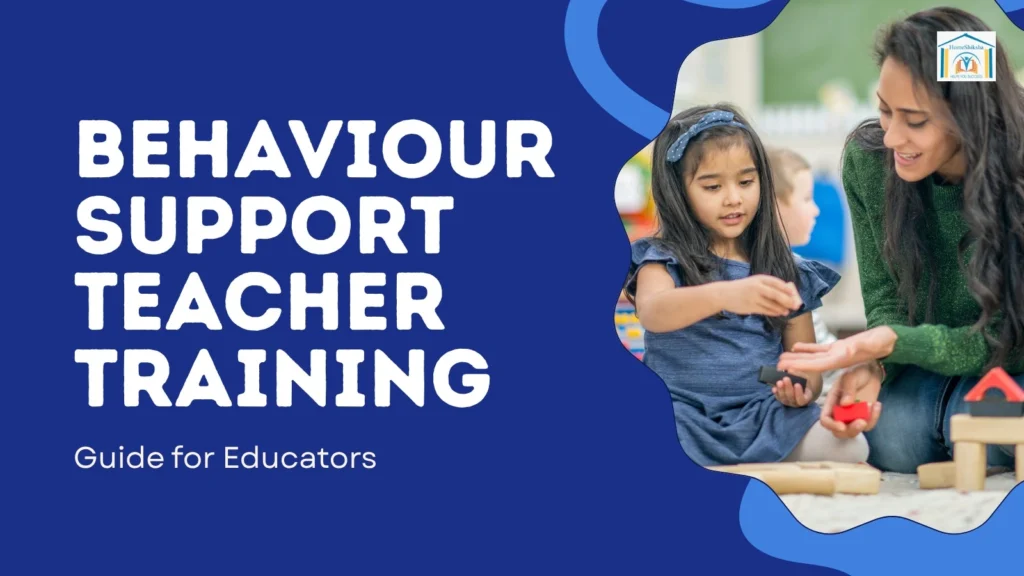
What Does a Behaviour Support Teacher Learn During Professional Training? Some children may find it difficult to follow classroom routines, manage emotions or express their needs. In such situations, repeated instructions may not always help. A Behaviour Support Teacher can understand these challenges and support the child during daily school activities. Behaviour Support Teacher Training helps educators learn practical skills such as behaviour observation, communication, positive behaviour strategies and classroom support. These skills can help teachers respond to children with greater understanding. Our country, India, is also focusing more on inclusive education. The Government of India’s Samagra Shiksha framework supports teacher training and educational support for Children With Special Needs (CWSN). When a Child’s Behaviour Is Trying to Say Something Some children may become upset when routines change, leave their seats during certain tasks or struggle to express what they need. These behaviours may look like disobedience, but there could be another reason behind them. The child may find instructions difficult, feel overwhelmed or struggle with communication. A trained support professional looks at the reason behind the behaviour and finds suitable ways to help. This approach focuses on understanding the child instead of simply correcting the behaviour, which is an important part of behaviour support. So, What Does a Behaviour Support Teacher Actually Do? The role of a Behaviour support teacher can vary from one school or child to another. In general, a Behaviour support teacher works with a student to make classroom participation easier and support positive behaviour. For example, the teacher may help a child: These responsibilities can form an important part of shadow teacher responsibilities when a child needs individual support during school hours. Behaviour Support Teacher Training Starts With Understanding, Not Correction A good Behaviour Support Teacher Training programme should help learners understand that every child may respond differently to the same situation: 1. Understanding Child Development Training can help educators understand how a child’s communication, emotions, social skills and learning can affect behaviour. This can help them respond with more patience. 2. Observing Behaviour Educators learn to notice what happens before and after a behaviour. For example, if a child leaves their seat during written work, the task or instructions may be causing difficulty. Such observations can help teachers and parents find suitable support. 3. Using Positive Behaviour Strategies Training may include simple tools such as visual schedules, clear instructions, positive reinforcement and structured routines. Their support should always suit the needs and nature of the kids. 4. Supporting Communication Children may express their needs through words, gestures, facial expressions or actions. Educators can learn to recognise these signs and encourage better communication. 5. Supporting Emotional Regulation Educators may also learn ways to help children handle frustration, disappointment and changes in routine. These strategies should be age appropriate and respectful. Small Changes Can Help Children Learn Better Behaviour support does not always need complex solutions. A child who finds sudden changes difficult may feel more comfortable with a short warning or a simple visual timetable. Another child may understand instructions better when they are given one step at a time. These small changes show why observing the child first is important. Behaviour Support Teacher Training can help educators understand such situations and choose suitable ways to support students. Supporting Inclusive Classrooms The aim of behaviour and inclusive classroom support is to help children take part in school activities. The Government of India’s Samagra Shiksha programme supports inclusive education, teacher training and assistance for Children With Special Needs. According to UDISE+ 2025-26, India has 14.67 lakh schools, 24.72 crore students and 1.02 crore teachers. This highlights the need for practical classroom support across different learning needs. What PRASHAST Means for Teachers The Ministry of Education has introduced PRASHAST, a school based tool that helps identify children with 21 disability conditions covered under the Rights of Persons with Disabilities Act, 2016. Teachers take part in the first stage, while special educators help with further screening and referral. PRASHAST is not a Behaviour Support Teacher Training programme. However, it shows why teachers should understand children’s needs, observe their behaviour and know when additional support may be needed. These skills can also be useful for educators working with children who need extra classroom support. Behaviour Support Teacher or Shadow Teacher? These terms can sometimes create confusion because their work may overlap in some settings. A shadow teacher generally provides individual classroom support to a particular student. The shadow teacher role may include helping a child follow routines, understand lessons, communicate with others and take part in classroom activities. A shadow teacher for inclusive education may work alongside the child and classroom teacher to support participation in a regular school setting. A Behaviour support teacher may focus more on behaviour, emotional regulation, classroom participation and strategies that can help a student manage everyday situations. Other related roles include a learning support educator, resource teacher, remedial educator and intervention teacher. Their duties can differ depending on their training, workplace and the needs of the children they support. Building Skills Through Different Teacher Training Programmes People interested in this field may come across several types of training. A shadow teacher training course may focus on individual classroom support, daily routines, communication and student participation. Learning support teacher training may cover ways to assist children who face learning or classroom difficulties. Similarly, getting inclusion teacher training can introduce educators to inclusive teaching practices and ways of involving children with different learning needs. There are also programmes related to teacher training for special needs, where learners may gain a broader understanding of disability, classroom adaptations and support methods. The right training depends on the learner’s background and the type of work they hope to do. Candidates should also understand that different roles may require different qualifications. Understanding Shadow Teacher Skills and Qualifications A person working as a shadow teacher may need a mix of classroom and interpersonal skills. Important shadow teacher skills could include patience, observation, communication, flexibility and the ability to work
How Can a Public Speaking Course for Kids Build Confidence and Communication Skills?
How Can a Public Speaking Course for Kids Build Confidence and Communication Skills? Speaking in front of others does not come easily to every child. Some students have good ideas but feel nervous when asked to answer in class, introduce themselves, tell a story or speak on a stage. Others may know the answer but hesitate to express it. Getting a public speaking course for kids can give your children a friendly space to practise speaking and sharing their thoughts with confidence. The aim of joining an after school public speaking course is not to turn every child into a professional speaker. Instead, children can learn to express themselves clearly, listen to others and become more comfortable while speaking. For Indian parents, these skills can be useful in school, group activities, competitions and everyday conversations. Furthermore, attending Public speaking classes for kids can also provide regular practice that may not always be possible during normal classroom hours. Why Do Communication Skills Matter for Students? Communication is more than speaking loudly or giving a speech. Children also need to explain their ideas, listen carefully, ask questions and respond to others. Presently, India’s National Education Policy 2020 places importance on developing skills such as communication, critical thinking and experiential learning. It also promotes a broader approach to education beyond rote learning. For a school student, communication can be useful in many simple cases: How a Public Speaking Course for Kids Can Help A Public Speaking Course for Kids can help children to participate in speaking activities in a structured but friendly way. Instead of asking them to deliver a long speech immediately, lessons may begin with short introductions, storytelling, conversations and simple activities. Public Speaking Is More Than Stage Speaking Parents sometimes connect public speaking only with debates, competitions or speeches. However, children use communication skills in many other situations. In addition, they may need to introduce themselves, describe an experience, tell a story, explain a school project or speak in a group. Public speaking activities for children can therefore include storytelling, role play, picture description, conversations and short presentations. These activities can make learning feel less formal, especially for younger children. They also allow children to practise without the pressure of a large audience. What Can Children Learn in Public Speaking Classes? The learning level should depend on the child’s age and comfort. However, many after school public speaking classes can cover simple skills such as: Speaking Clearly Children can practise pronunciation, voice clarity and speaking at a pace that others can understand. Building a Simple Speech They can learn how to start with an introduction, share the main idea and end their speech properly. Storytelling Stories can make speaking practice enjoyable. Children may learn how to describe characters, events and ideas in their own words. Listening and Responding Good communication also involves listening. Children can learn to pay attention to what others say and respond appropriately. Body Language Simple awareness of eye contact, facial expressions and posture can help children understand how communication works beyond words. Speaking With Confidence Confidence does not mean that a child will never feel nervous. It can simply mean feeling prepared enough to speak even when there is some hesitation. Government Focus on Holistic Learning and Communication The need for broader skill development has also been recognised in India’s education policy. The National Education Policy 2020, published by the Ministry of Education, promotes holistic development and identifies communication among the skills that education should help develop. Moreover, the policy also supports activity based and experiential learning. Such an approach can make subjects like speaking and communication more engaging for students because children can learn through participation rather than only reading or memorising. For parents, who are searching for confidence building courses for kids, public speaking can be one option alongside sports, music, art and other activities. Why After School Learning Can Be Helpful School schedules are generally very busy. Students have classes, homework and examinations. This leaves limited time to explore additional interests. Joining reliable after school public speaking classes can give children a separate space to work on speaking skills without mixing them with their regular academic lessons. Short, planned sessions may also make it easier for children to practise in a regular manner. Furthermore, parents should create a balanced routine for after school classes and academics. They should understand that their children need time for rest, play, family and hobbies. An additional course should fit comfortably into their schedule rather than making the day feel overloaded. How Parents Can Support a Child Who Is Shy About Speaking Parents do not need to push a child directly onto a stage. Taking small steps slowly can be more comfortable for their kids. You can try simple activities at home, such as asking the child to: Moreover, you should avoid correcting every small mistake of your kids. Constant correction can make some children more conscious about speaking. It may be better to listen first and offer gentle suggestions afterwards. The purpose is to help children feel that their ideas are worth sharing. How to Choose the Right Public Speaking Course for Kids Not every course will suit every child. Before enrolling, parents can look at a few simple factors. Check the age group: Younger children may enjoy stories and games, while older students may be ready for presentations or discussions. Understand the teaching style: Look for activities that help and motivate children to participate in activites rather than only memorising speeches. Ask about individual support: Some children may need more time before they feel comfortable speaking. Check the course duration: A course should fit the child’s school routine. Take care of the child’s interests: A child who enjoys storytelling may respond differently from one who prefers debates or discussions. Furthermore, parents can also compare public speaking with other personality development for students programmes. The right choice should depend on what the child enjoys and what they want to improve in themselves. Learning Public Speaking With
AI for School Students: A Skill Children Can Start Learning Today
An After School AI Course for Kids can introduce children to artificial intelligence through age-appropriate activities while developing problem-solving, creativity, critical thinking and responsible technology skills.
Can After School Courses Improve Academic Performance? Here is What Research Says
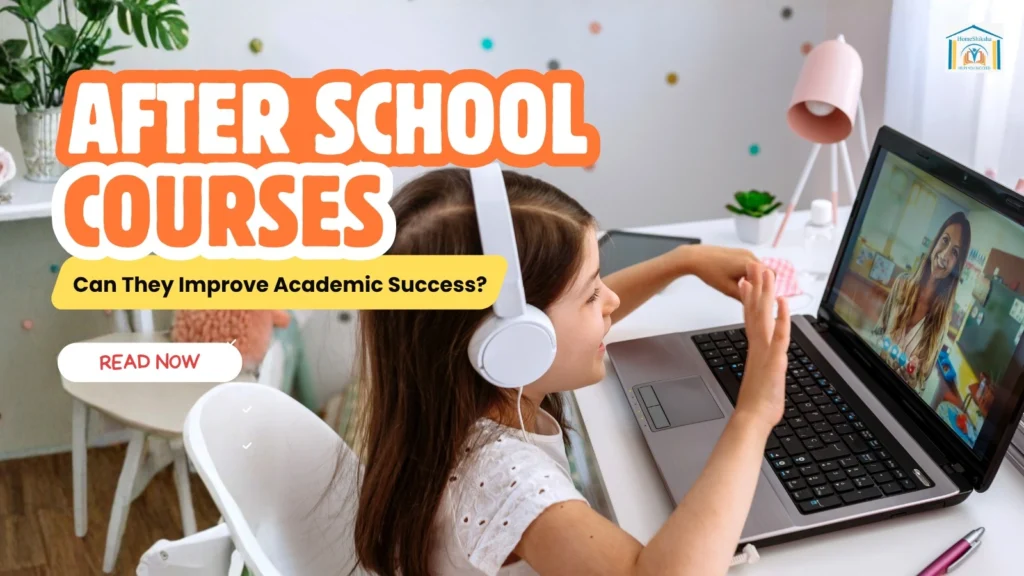
Can After School Courses Improve Academic Performance? Here is What Research Says Every parent wants their child to do well in school. Along with getting good marks in the exams, they also hope their child becomes confident, creative, and ready for the future. For this reason, many after school courses have become popular among Indian families. You should be aware that every child learns differently. Some kids like to code, others perform better in art, music, or public speaking. Further, attending after school courses can help kids to learn about their interests and skills that can help them in the future. Moreover, research by the OECD, UNESCO, CASEL, and the Harvard Graduate School of Education suggests that learning beyond textbooks can help improve children’s overall development. In addition, India’s National Education Policy (NEP) 2020 also promotes holistic education by promoting creativity, practical learning, communication, and emotional well-being along with academics. What Are After School Courses? After School Courses are structured programmes that children attend after school to learn new skills in an enjoyable way. Unlike regular tuition, these after school learning programmes focus on practical learning and creativity. At present, coding, robotics, public speaking, music, art, language learning, chess, and personality development are trending courses among the students. Many parents also choose online after school courses because their kids do not need to go anywhere else to learn something after their school hours. These after school activities for students help children stay curious while building confidence and useful life skills. Can After School Courses Improve Academic Performance? When kids join after school courses of their interest, it can help them learn new skills beyond regular school hours. Unlike tuition classes, these after school learning programmes help children to focus on practical learning and enhance their creativity. Today, many kids like coding, robotics, music, art, language learning, and public speaking. Many families also prefer online after school courses for their flexibility. These after school activities for students encourage curiosity, confidence, and overall skill development. What Research Says About After School Courses As this concept of after school courses is new for Indian parents, they want some evidence before enrolling their children in additional learning programmes. Several well-known education organisations believe that children learn better when education is just not related to textbooks only. Their findings show that atttending After School Courses of their choice can support both academic learning and overall development. OECD: Learning Beyond the Classroom The Organisation for Economic Co-operation and Development (OECD) says education should prepare children for real life, not just exams. Through its PISA study, the OECD looks at skills such as problem-solving, critical thinking, teamwork, and applying knowledge in everyday life. Furthermore, many After School Courses help children build these skills through activities like coding, robotics, music, and public speaking. UNESCO: Every Child Should Learn in Different Ways According to UNESCO, the goal of education should be providing support to child’s intellectual, social, emotional, and creative growth. In place of relying only on memorisation of concepts, children should also learn by exploring, collaborating, and performing hands-on activities. In this way, learning After School Courses can be valuable for them. They encourage children to ask questions, explore their interests, and develop confidence while learning things in an enjoyable way. NEP 2020 Supports Holistic Learning India’s National Education Policy (NEP) 2020 motivates schools to focus on practical learning, creativity, arts, sports, and life skills for students along with academics. This approach, known as NEP 2020 holistic education, aims to help children learn everything from academics to skills. In addition, the Ministry of Education’s UDISE+ 2023–24 report shows that India has over 24.8 crore school students studying in more than 14.7 lakh schools. As education moves towards skill-based learning, attending After School Courses can give students additional options to practise these important skills. CASEL and Harvard: Learning Is More Than Marks Research by CASEL shows that children also need social and emotional skills like self-awareness, teamwork, good communication, and responsible decision-making. Activities such as public speaking classes for students and group projects help children develop these skills in a natural way. Moreover, the Harvard Graduate School of Education also says that children learn better when they enjoy what they are learning and feel supported. When parents choose After School Courses based on their child’s interests, children are more likely to stay motivated, build confidence, and take part actively in both school and everyday learning. Indian Government Data Also Supports Holistic Learning India’s education system is giving more importance to practical learning along with academics. Under NEP 2020 holistic education, the focus is on helping children build skills that are useful in real life. The PARAKH National Survey 2024 by NCERT found that many students can remember what they learn, but they need more practice in applying concepts, solving real-life problems, and thinking critically. Similarly, the National Achievement Survey (NAS) 2021 by the Ministry of Education highlighted the need to improve conceptual understanding instead of only memorising lessons. These reports do not suggest replacing school education. Instead, they show that children can benefit from learning opportunities that help them develop communication, creativity, teamwork, and problem-solving skills alongside their regular studies. Which After School Courses Can Help Improve Overall Development of the Kids? The best course depends on the interests, age, and learning goals of the kids. However, you can take help from the following table to get can idea about useful after school courses for your children: Popular After School Courses Course Skills Developed How It Helps Learning Coding Logical thinking, problem solving Helps in Maths and computational thinking Public Speaking Confidence, communication Improves presentations and classroom participation Robotics Creativity, teamwork Supports STEM learning Art & Craft Observation, imagination Encourages creative expression Music Memory, discipline Improves focus and listening skills Language Learning Vocabulary, communication Strengthens reading and writing Creative Writing Imagination, expression Improves language skills and storytelling How to Choose the Right After School Course Every child is different, so you should choose After School Courses that match
Why Every Child Learns Differently: The Growing Role of SEN Teachers in India

Why Every Child Learns Differently: The Growing Role of SEN Teachers in India Have you ever noticed how two children in the same class can understand the same lesson very differently? One child may solve maths problems quickly, while another may need more time and practice to solve the same. Some children learn best by reading things. Further, you must be seeing that some kids understand things in a better manner through pictures, games, or hands-on activities. And, you should know that it is completely normal because every child has a unique way of learning things. However, for some children, it can be difficult to excel in academics or sports by using regular learning methods. Some children may find it difficult to read, write, stay focused, communicate, or understand a few concepts. However, these challenges do not mean they are less intelligent. They simply need the right kind of support. In such cases, SEN teachers in India can help children learn in ways that match their abilities, making learning less stressful and more enjoyable. As people are becoming more aware of inclusive education, more parents are looking for someone to provide personalised learning for children. Thus, hiring SEN teacher near me can help kids build confidence and achieve their full potential. What Is an SEN Teacher? SEN stands for Special Educational Needs. An SEN teacher is a trained educator who works with children who need extra learning support. These children may have learning difficulties, developmental conditions, or other educational needs that make regular classroom learning more challenging. Unlike a regular tutor, an SEN teacher does much more than teach school subjects. They first understand how a child learns, what their strengths are, and where they need help. Based on this, they create lessons that suit the child’s learning style. For example, if a child finds reading difficult, the teacher may use pictures, flashcards, storytelling, or simple activities instead of only textbooks. If a child struggles to stay focused, the teacher may divide the lesson into shorter, more engaging sessions. Furthermore, their aim is not just to improve marks but to help children enjoy learning, feel confident, and become more independent. Why Is India Talking More About Inclusive Education? In recent years, India has taken several important steps to make education more inclusive. The idea of inclusive education in India is simple. Under this, every child should get an equal chance to learn, no matter what challenges they face. One of the biggest changes came with the National Education Policy (NEP) 2020. The policy highlights that children with different learning needs should receive personalised support so they can learn alongside their peers whenever possible. It also encourages schools to create flexible learning environments where every child feels included. Another important law is the Rights of Persons with Disabilities (RPwD) Act, 2016. This law recognises education as a right for children with disabilities and encourages schools to provide suitable support, trained educators, and accessible learning environments. According to the Ministry of Education, Samagra Shiksha supports more than 21 lakh Children with Special Needs (CWSN) studying in schools across the country. The programme also provides financial support for appointing special needs teacher in India, preparing learning materials, and improving access to education. Furthermore, the Indian Government data shows that more than 8 lakh ramps with handrails and nearly 1.5 lakh accessible toilets have been created in schools to support children with disabilities. Which Children Can Benefit from an SEN Teacher? Many parents think SEN teachers are only for children with severe disabilities. In reality, they can support children with a wide range of learning needs. A child may benefit from an SEN teacher if they have: Some children may simply learn at a slower pace than others. With patient guidance and the right teaching methods, they can make excellent progress. It is also important to remember that every child is different. Two children with the same condition may have completely different learning styles. That is why personalised teaching is so valuable. How SEN Teachers Help Children Learn Better One of the biggest advantages of an SEN teacher is that they teach according to the child’s needs instead of following the same method for everyone. For example, if a child finds reading difficult, the teacher may use pictures, stories, or simple activities to explain the lesson. If a child has trouble sitting for long periods, the teacher may include short breaks and fun learning games. The goal is to make learning easier, not stressful. Signs Your Child May Need Extra Learning Assistance from a Tutor Every child has good and bad days in their life. So, if your child struggles with one subject for a short time, it does not always mean they need an SEN teacher for them. However, if you notice some of these signs in your child for several months, it will be good to speak with the school of your child or a qualified professional to sort this out. Furthermore, you may need to hire extra learning support for children if they: How HomeShiksha Helps Families Find SEN Teachers Finding a qualified SEN teacher can sometimes feel difficult, especially when parents are not sure where to begin. Here, taking help from educational platforms like HomeShiksha can make the process easier. Educational platforms like HomeShiksha connects families with experienced SEN teachers who understand different learning needs. On these sites, parents can look for teachers based on the child’s age, learning requirements, preferred location, and mode of learning. Furthermore, families can also choose between online classes or a home tutor for special needs child. It should always depend on what method is the most suitable for your child. Always remember, the aim of hiring a home tutor for special needs child is not just to improve academic performance. It should also help children become more confident, independent, and comfortable with learning. Every Small Step Matters Children with special educational needs do not need to be compared with others. They simply need
Inclusive Education in India: How Personalised Learning Support Can Help Every Child
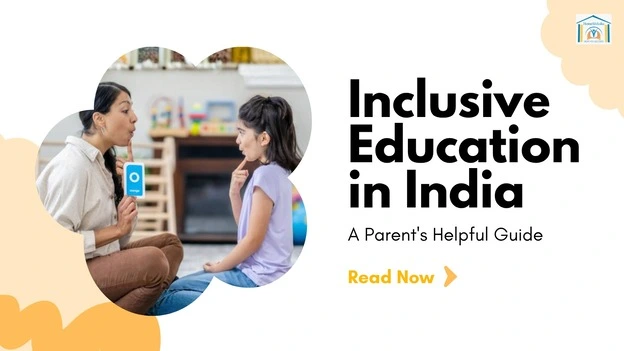
Inclusive Education in India: How Personalised Learning Support Can Help Every Child Every parent wants their child to enjoy school, make friends, and learn things with confidence. However, as a parent, you must be aware that not every child learns in the same way. Some children may need a little extra help from their teachers to understand lessons or follow classroom routines. Sometimes, they need help to communicate with teachers and classmates. In such cases, learning about Inclusive Education in India becomes important. The concept of inclusive education gives every child the chance to study in the same classroom. Whether it is a child with disabilities or different learning needs, they can learn in a regular school and take part in everyday school activities. To make this possible, many parents and schools can get help from professionals such as Shadow Teachers for Special Needs, Learning Support Teachers (LSTs), Resource Teachers, and Remedial Educators. What Is Inclusive Education in India? Inclusive education means giving every child the chance to learn in the same classroom, even if they have a disability or different learning needs. Instead of teaching children with special needs separately, schools try to provide the extra support they need so they can learn with their classmates. The Government of India also supports this approach through the National Education Policy (NEP) 2020 and the Rights of Persons with Disabilities (RPwD) Act, 2016. Furthermore, these initiatives help schools to make education accessible for all children and provide equal learning opportunities, regardless of their abilities. Those who want help can find official information about it through the Ministry of Education and the Department of Empowerment of Persons with Disabilities. According to the latest UDISE+ report published by the Ministry of Education, more than 18.4 lakh Children with Special Needs (CWSN) are enrolled at the elementary level, while nearly 4 lakh students are studying at the secondary level. In addition, the report also shows that 71.84% of schools have ramps that are a great help for children with disabilities. Why Some Students Need Personalised Learning Support As a parent, every child has a unique way of learning. Some students understand lessons through regular classroom teaching. However, some students may need additional help from their teachers or tutors to keep pace with daily learning. Moreover, children with the following conditions may need personalised guidance: Furthermore, the purpose of personalised support is not to complete tasks for the child. Instead, it helps children understand concepts in an independent manner while taking part actively in classroom life. How Different Learning Support Professionals Help Children Learn Better Schools and learning centres may use different titles for professionals who support children with diverse learning needs. Understanding these roles can help parents choose the right support for their child. Here are different types of learning support professionals for children with special conditions: Learning Support Professionals Learning Support Professional How They Help Children When They May Be Needed Shadow Teacher Stays with the child in the classroom and helps them understand lessons, follow instructions, and take part in school activities. Children with autism, ADHD, developmental delays, or those who need regular support in school. Learning Support Teacher (LST) Gives extra help in studies and classroom activities to children who find learning difficult. Children who need additional support in one or more subjects. Inclusion Teacher Helps children with special needs learn comfortably with other students in the same classroom. Children studying in inclusive or mainstream schools. Resource Teacher Works with children individually or in small groups to improve learning and communication skills. Children who need extra attention beyond regular classroom teaching. Learning Support Educator Creates a learning plan based on the child’s needs and works with parents and teachers. Children who need personalised learning support, especially in private or international schools. Remedial Educator Helps children improve reading, writing, spelling, and maths through simple teaching methods. Children with learning disabilities or those who are behind in their studies. Behavior Support Teacher Helps children improve their behaviour, emotions, social skills, and confidence. Children who find it difficult to manage emotions or interact with others. Intervention Teacher Provides extra support in a specific subject or skill before the child falls further behind. Children who need short-term help in a particular learning area. In many cases, schools, parents, therapists, and learning support professionals need to work together to help children learn in a comfortable manner. They also help children participate actively in classroom activities. Hence, a combined approach can give children the confidence to achieve both academic and personal milestones in a convenient style. Benefits of Choosing Personalised Learning Assistance for Your Children When children receive academic support based on their own requirements, they can learn things in a more meaningful and enjoyable manner. They can get the following benefits by learning from tutors or home tutors: They can participate in the classroom in a better way Some children hesitate to answer questions or join classroom activities because they find it difficult to follow lessons. With the help of the right home tutor, they can understand instructions better, participate in class, and feel more comfortable learning with their classmates. Children can build self-confidence with the help of personalised tutors When children start completing small tasks on their own, they feel proud of themselves. These small successes motivate them to try new things, ask questions, and take part in both studies and school activities with more confidence. They can perform better in their academics A Learning Support Teacher (LST) or Remedial Educator teaches according to the child’s learning style. They can explain difficult topics in a simpler style. Hence, it helps children improve their reading, writing, mathematics, and overall understanding of subjects. Improves Communication and Social Skills Some children find it difficult to talk with teachers or make friends. With regular guidance and practice with the help of home tutors, they can learn to express themselves better, communicate with confidence, and build positive relationships with classmates. Helps Parents and Teachers Work Together Children make better
Class 10 and 12 Academic Session 2027 Begins: Why the First Two Months Can Shape Your Board Results
Class 10 and 12 Academic Session 2027 Begins: Why the First Two Months Can Shape Your Board Results A new academic session gives students a fresh chance to start well, mainly those who are in Classes 10 and 12. The first few months are important for students because they help them understand subjects in a better manner. In place of waiting until the exams are close, students should start following a Board Exam Study Plan 2027 from the beginning of the session. Parents can help their kids by helping them make a regular study routine and supporting their children whenever they need help. Also, if they require, they can find help from career counsellors. Why the First Two Months Matter More Than Many Parents Realise The early weeks of the academic session are generally ignored by many students. Students are still adjusting to new teachers, different subjects, and changing routines. However, this is exactly when they have the advantage of learning concepts at a comfortable pace. Once chapters begin to pile up, many students struggle to revise older topics while keeping up with new lessons. This thing creates unnecessary pressure during the second half of the academic year. Every year, several lakhs of students take part in the CBSE Class 10 and Class 12 board exams. In the year 2026, more than 42 lakh students were registered for both of the board exams. It shows how competitive board examinations have become. Hence, starting with a clear study plan for board exams can help students avoid this situation. Their study routine should include daily revision, classroom learning, and weekly practice of topics. It helps students to build confidence without making studies feel difficult. Build Strong Basics Before the Syllabus Expands Both CBSE and several state boards have the curriculum of classes 10 and 12 to be studied throughout the year. If students understand these basic topics early, advanced chapters become much easier to learn for them. For example: Common Mistakes Students Make at the Beginning of the Session Many students unintentionally lose valuable time during the first few weeks. These small mistakes often become bigger challenges later. Some common examples include: These habits can affect both Class 10 board exam preparation and Class 12 board exam preparation. Parents should regularly talk to their children about their classroom experience instead of waiting until examination results reveal learning gaps. How to Create an Effective Board Exam Study Plan 2027 Every student studies differently, but a balanced plan works better than long, tiring study hours. A practical daily routine may include: Students should also reserve one day every week for revision instead of starting a new topic. This helps improve memory and reduces exam-time stress. The goal is not to study for long hours from Day One. The goal is to study consistently. Parents Can Help Without Creating Extra Pressure Many parents worry about board examinations and unknowingly pass that anxiety to their children. Instead of discussing marks every day, they can focus on building healthy study habits. Simple actions can help: Children perform better when they feel supported rather than pressured. Sometimes parents notice that despite regular effort, their child continues to struggle with certain subjects. In such situations, personalised guidance can make learning easier. Many families choose experienced educators through platforms like HomeShiksha, where students can connect with qualified teachers according to their learning requirements instead of waiting for academic difficulties to increase. Every Student Learns at a Different Pace It is important to remember that no two students learn in the same way. Some quickly understand classroom lessons, while others may need additional explanation or practice. Comparing children with classmates or relatives rarely motivates them. Instead, parents should focus on individual progress. Even small improvements during the first two months can contribute to stronger performance during board examinations. For students who receive timely academic support, the rest of the session often becomes more manageable because they have already developed a disciplined learning routine. Simple Board Exam Study Plan 2027 for Class 10 and 12 Students Students should know that making a study timetable for Board Exam Study Plan 2027 does not mean they need to study all day. They should study a little every day rather than studying for long hours once in a while. Daily Study Plan Students can create a simple study plan for themselves as follows: Further, giving even two to three focused hours after school can be enough if students study on a regular basis Weekly Study Plan In addition to the daily study schedule, there should be a plan for study every weekend. Hence, class 10 and 12 students should: This weekly revision prevents students from forgetting concepts and reduces pressure before unit tests or pre-board examinations. Monthly Study Plan At the end of each month, students can go ahead with the following Board Exam Study Plan 2027: Meanwhile, students can follow this study plan for board exams from the beginning of the academic session. It can help students complete the syllabus with enough time left for revision. When Should Parents Choose a Home Tutor for Class 10 and 12? Many parents wait for pre-board examination marks of their children before looking for additional academic support by tutors or home tutors. By then, students may already have several pending chapters, and it may increase their stress. Hence, it is better to observe a child’s learning pattern during the first two months. Furthermore, parents may choose a Home tutor for Class 10 and 12 if they notice that their child: Today, parents also have the flexibility to choose tutors based on the student’s board, subject, and preferred learning style. Platforms like HomeShiksha make this process easier by helping families connect with experienced tutors. They can provide one-to-one academic support at home or through online classes, depending on the student’s needs. Need Personalised Academic Support for Board Exams? If your child needs extra guidance in difficult subjects or personalised one-to-one learning, connect with experienced home tutors for
Are You Looking for a Shadow Teacher Near You? 7 Things to Check Before Hiring
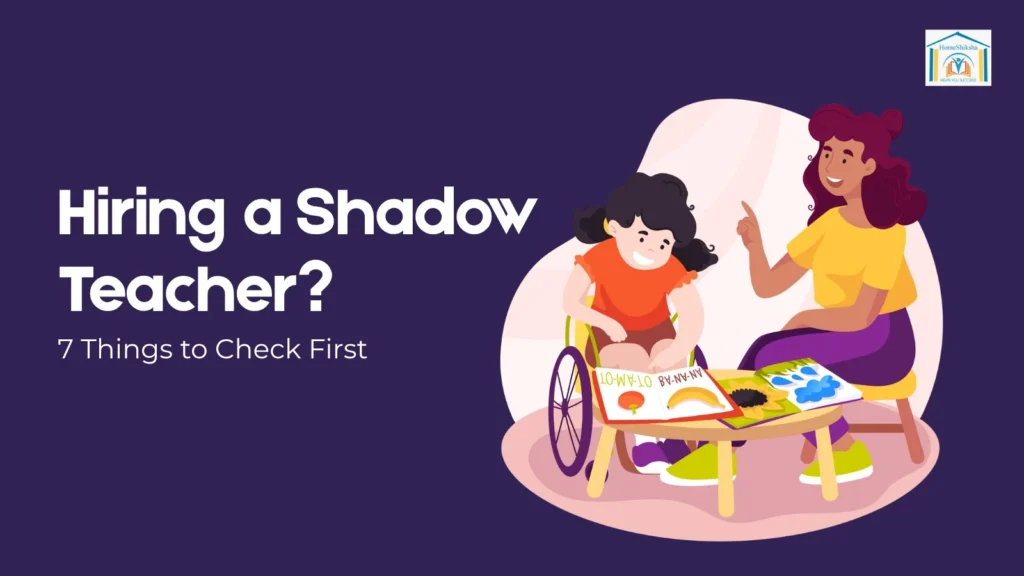
Are You Looking for a Shadow Teacher Near You? 7 Things to Check Before Hiring Choosing a Shadow Teacher for Special Needs Child is an important decision for any parent. When your child gets the right support, they can start taking part in daily activities and enjoy learning with other students. When a qualified and trained teacher helps your kid, they can easily become aware of their strengths and weaknesses. And once it is clear, they can be provided with the right guidance by their special educator. Parents can get relieved by learning that the Indian government is also promoting inclusive education for special children. Also, many parents look online for a Shadow Teacher Near Me. A good shadow teacher should have the right qualifications, relevant experience, strong communication skills, and the ability to work closely with both the child and the school. A shadow teacher may support your child by: A Qualified Shadow Teacher for School is not there to replace the classroom teacher. Instead, both work together to ensure the child receives the support they need while remaining an active part of the class. When looking for Professional Shadow Teacher Services, it is also important to choose someone who promotes independence in children. Their goal is to help the child become more confident and capable of managing classroom tasks with less support over time. Why Early Identification is Necessary? As a parent, you should be aware that every child grows and learns at their own pace. However, if you notice that your child is facing difficulty in communicating, becoming inattentive, showing violent behaviour, or having difficulty with social interactions. When such signs are caught early by parents, teachers, or caretakers, they should hire professional shadow teacher services. With proper guidance and support from shadow teachers, many children can develop important academic, social, and daily living skills more effectively. The Government of India also promotes early identification and inclusive education through various initiatives to ensure children receive proper support as early as possible. Moreover, parents can learn more through these official resources: 7 Things to Check Before Hiring a Shadow Teacher for Your Child Choosing the right Shadow Teacher for Special Needs Child is about finding someone who understands your the unique needs of your kid and can support their learning journey. Here are a few important things to look for before making a decision in getting a shadow teacher for your ward: 1. Check Qualifications and Training You should look for a teacher with relevant training in special education or child development. Only a qualified shadow teacher for school and other academic institutions knows about inclusive classrooms and knows how to provide assistance to kids with different learning needs. 2. Experience With Similar Needs Every child is different, so experience of your chosen special educator is important. For example: 3. Ability to Work With the School You should check if your chosen shadow teacher should work closely with the class teacher and parents. Good communication and teamwork help create a better learning experience for the child. 4. Focus on Independence The goal is to help the child become confident and independent. A good teacher helps children to: 5. Patience and Positive Support Each kid learn in a different manner. So, it is recommended to choose someone who is calm, understanding, and motivates progress through positive guidance instead of pressure. 6. Regular Communication With Parents Parents should receive regular updates about the child’s progress, classroom behaviour, and areas where extra support may be needed. If you are planning to Hire a Shadow Teacher, platforms like HomeShiksha can help you connect with experienced professionals. 7. Ask for References and a Trial Session from your chosen instructor Before making a final decision, you can ask for references from previous parents or schools. A trial session also helps you see whether your child feels comfortable with the shadow teacher. The Best Shadow Teacher for Special Needs Child is someone who builds trust, understands your child’s needs, and helps in improving their overall development. How a Shadow Teacher Supports Different Learning Needs A shadow teacher supports children based on their individual learning needs. The kind of help they provide may be different for every child. Furthermore, you can go through the following table to learn about different special learning needs and how they help your child: How a Shadow Teacher Helps Different Learning Needs Learning Need How a Shadow Teacher Helps Autism Helps the child follow daily routines, communicate better, and take part in classroom activities. ADHD Supports the child in staying focused, following instructions, and completing classroom tasks. Learning Difficulties Explains lessons in a simpler way and provides extra support during class. Speech or Communication Challenges Promotes the child to communicate with teachers and classmates. Social or Behavioural Challenges Helps the child manage emotions and interact positively with others. You should be aware that a shadow teacher does not do the child’s work. In place of it, they guide and help the child to learn, participate, and become more confident and independent at their own pace. Finding a Shadow Teacher in Your City Many schools today promote inclusive education and welcome classroom assistance for children with different learning needs. If you are looking for a Shadow Teacher in Bangalore, Shadow Teacher in Hyderabad, or Shadow Teacher in Mumbai, choose someone who understands your child’s needs and can work well with the school. Along with qualifications, look for a shadow teacher who is patient, communicates well, has experience with children with special needs, and has a caring approach. You can also arrange a trial session to see if your child feels comfortable with the teacher. Choosing the right Shadow Teacher for Special Needs Child is about finding someone who understands your child’s needs and helps them learn with confidence. Furthermore, if you are looking for reliable classroom assistance from qualified mentors, HomeShiksha can help you connect with experienced shadow teachers in different cities. The platform helps parents to find professionals based on
How Many Hours of Home Tuition Does a Class 1 to 5 Student Need?
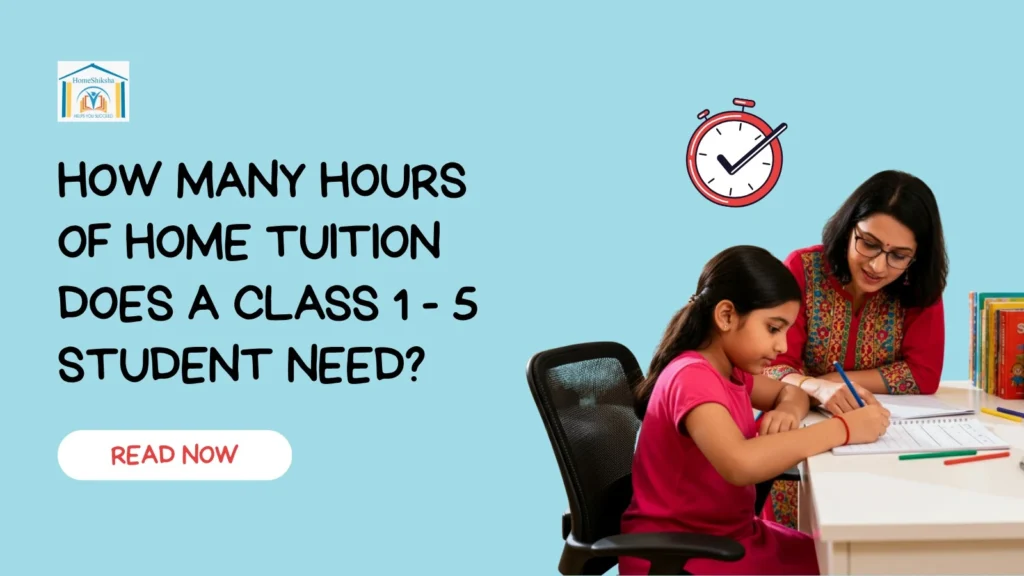
Find the ideal home tuition hours for primary students and learn how a Home Tutor for Class 1 to 5 can support your child’s learning.