

How Can a Public Speaking Course for Kids Build Confidence and Communication Skills?
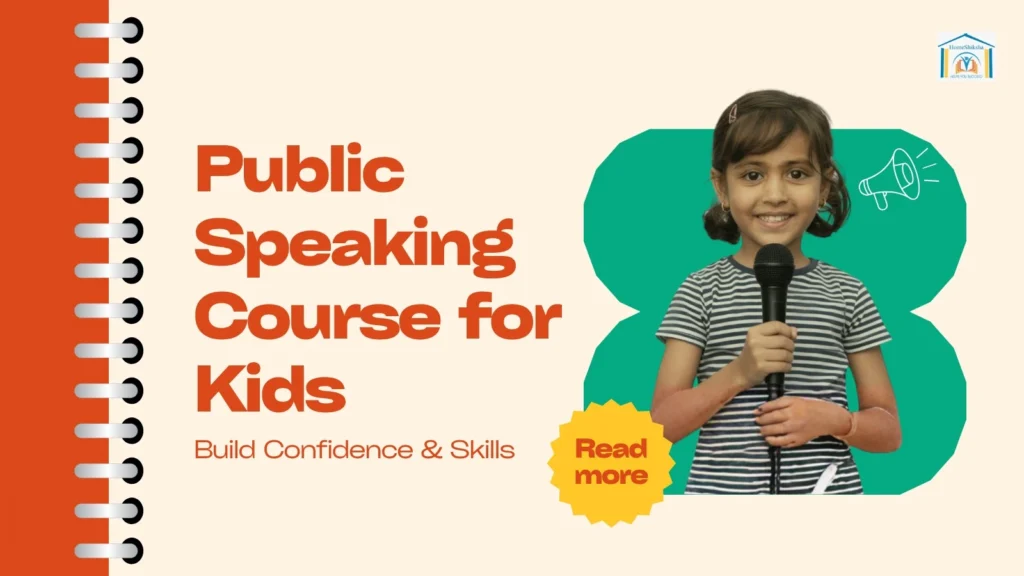
Speaking in front of others does not come easily to every child. Some students have good ideas but feel nervous when asked to answer in class, introduce themselves, tell a story or speak on a stage. Others may know the answer but hesitate to express it.
Getting a public speaking course for kids can give your children a friendly space to practise speaking and sharing their thoughts with confidence. The aim of joining an after school public speaking course is not to turn every child into a professional speaker. Instead, children can learn to express themselves clearly, listen to others and become more comfortable while speaking.
For Indian parents, these skills can be useful in school, group activities, competitions and everyday conversations. Furthermore, attending Public speaking classes for kids can also provide regular practice that may not always be possible during normal classroom hours.
Why Do Communication Skills Matter for Students?
Communication is more than speaking loudly or giving a speech. Children also need to explain their ideas, listen carefully, ask questions and respond to others.
Presently, India’s National Education Policy 2020 places importance on developing skills such as communication, critical thinking and experiential learning. It also promotes a broader approach to education beyond rote learning.
For a school student, communication can be useful in many simple cases:
- Answering questions in class
- Taking part in group discussions
- Giving presentations
- Sharing ideas with teachers
- Making new friends
- Participating in school events
How a Public Speaking Course for Kids Can Help
A Public Speaking Course for Kids can help children to participate in speaking activities in a structured but friendly way. Instead of asking them to deliver a long speech immediately, lessons may begin with short introductions, storytelling, conversations and simple activities.
- Children can practise speaking regularly and feel more comfortable sharing their thoughts.
- They can learn to organise their ideas and explain them in a clear way.
- Regular activities can help improve communication skills for students in school and daily life.
- Children get a chance to express their own opinions and ideas.
- Practice and gentle guidance can help them manage nervousness while speaking.
- Storytelling, conversations and short activities can make learning enjoyable.
Public Speaking Is More Than Stage Speaking
Parents sometimes connect public speaking only with debates, competitions or speeches. However, children use communication skills in many other situations.
In addition, they may need to introduce themselves, describe an experience, tell a story, explain a school project or speak in a group. Public speaking activities for children can therefore include storytelling, role play, picture description, conversations and short presentations.
These activities can make learning feel less formal, especially for younger children. They also allow children to practise without the pressure of a large audience.
What Can Children Learn in Public Speaking Classes?
The learning level should depend on the child’s age and comfort. However, many after school public speaking classes can cover simple skills such as:
Speaking Clearly
Children can practise pronunciation, voice clarity and speaking at a pace that others can understand.
Building a Simple Speech
They can learn how to start with an introduction, share the main idea and end their speech properly.
Storytelling
Stories can make speaking practice enjoyable. Children may learn how to describe characters, events and ideas in their own words.
Listening and Responding
Good communication also involves listening. Children can learn to pay attention to what others say and respond appropriately.
Body Language
Simple awareness of eye contact, facial expressions and posture can help children understand how communication works beyond words.
Speaking With Confidence
Confidence does not mean that a child will never feel nervous. It can simply mean feeling prepared enough to speak even when there is some hesitation.
Government Focus on Holistic Learning and Communication
The need for broader skill development has also been recognised in India’s education policy. The National Education Policy 2020, published by the Ministry of Education, promotes holistic development and identifies communication among the skills that education should help develop.
Moreover, the policy also supports activity based and experiential learning. Such an approach can make subjects like speaking and communication more engaging for students because children can learn through participation rather than only reading or memorising.
For parents, who are searching for confidence building courses for kids, public speaking can be one option alongside sports, music, art and other activities.
Why After School Learning Can Be Helpful
School schedules are generally very busy. Students have classes, homework and examinations. This leaves limited time to explore additional interests.
Joining reliable after school public speaking classes can give children a separate space to work on speaking skills without mixing them with their regular academic lessons. Short, planned sessions may also make it easier for children to practise in a regular manner.
Furthermore, parents should create a balanced routine for after school classes and academics. They should understand that their children need time for rest, play, family and hobbies. An additional course should fit comfortably into their schedule rather than making the day feel overloaded.
How Parents Can Support a Child Who Is Shy About Speaking
Parents do not need to push a child directly onto a stage. Taking small steps slowly can be more comfortable for their kids.
You can try simple activities at home, such as asking the child to:
- Describe their day in a few sentences
- Tell a short story
- Explain how to play a favourite game
- Talk about a picture
- Share an opinion about a book or film
- Introduce a family member
Moreover, you should avoid correcting every small mistake of your kids. Constant correction can make some children more conscious about speaking. It may be better to listen first and offer gentle suggestions afterwards.
The purpose is to help children feel that their ideas are worth sharing.
How to Choose the Right Public Speaking Course for Kids
Not every course will suit every child. Before enrolling, parents can look at a few simple factors.
Check the age group: Younger children may enjoy stories and games, while older students may be ready for presentations or discussions.
Understand the teaching style: Look for activities that help and motivate children to participate in activites rather than only memorising speeches.
Ask about individual support: Some children may need more time before they feel comfortable speaking.
Check the course duration: A course should fit the child’s school routine.
Take care of the child’s interests: A child who enjoys storytelling may respond differently from one who prefers debates or discussions.
Furthermore, parents can also compare public speaking with other personality development for students programmes. The right choice should depend on what the child enjoys and what they want to improve in themselves.
Learning Public Speaking With HomeShiksha
For parents looking for guided public speaking classes for kids, HomeShiksha includes Public Speaking Stars among its after school learning options. The course can give children a dedicated setting to practise communication and express their ideas through live learning.
A guided format may be helpful for children who feel more comfortable learning with regular support. At the same time, parents can choose activities according to their child’s age, interests and available time.
HomeShiksha also offers other after-school learning options. It allows parents to explore different subjects rather than limiting children to one type of activity.
Public Speaking Can Support Everyday Growth
A child may not become comfortable with speaking after just a few classes. Like any other skill, communication needs time and practice. Small improvements, such as answering one question in class or speaking for a minute about a favourite topic, can still be meaningful.
The National Education Policy 2020 supports a broader approach to learning. It identifies life skills such as communication, cooperation and teamwork, while also encouraging critical thinking, creativity and learning beyond rote methods.
For parents, the aim should be simple: give children opportunities to practise, without expecting them to change their personality. A quiet child can also become a good communicator in their own way.
A Simple Way to Start With HomeShiksha
A Public Speaking Course for Kids can be a useful choice for students who want more practice outside the classroom. HomeShiksha offers Public Speaking Stars as part of its after-school course options, where children can work on speaking and expressing their ideas through guided learning.
The course may suit children who need a little extra practice or simply enjoy speaking activities. Parents can explore the programme along with other HomeShiksha courses and choose an option that fits their child’s interests.
Public Speaking Course for Kids FAQs:
What is a Public Speaking Course for Kids?
It is a course that helps children practise speaking, expressing ideas and communicating through activities such as storytelling, conversations and presentations.
Can shy children join public speaking classes?
Yes. A supportive class can allow shy children to practise gradually and speak at a pace that feels comfortable.
What skills can children learn through public speaking?
Children can practise clear speaking, listening, storytelling, self-expression and organising their thoughts.
What is the right age to start public speaking classes?
Children can begin with simple, age-appropriate speaking activities at a young age. The course should match their understanding and comfort level.
Are after school public speaking classes useful for students?
They can provide extra opportunities to practise communication outside regular school hours and may help children feel more comfortable sharing their ideas.