

Common Mistakes in Board Exams 2026 and How to Avoid Them
Simple Study Strategies and Helpful Tips to Avoid Common Mistakes in Board Exams 2026
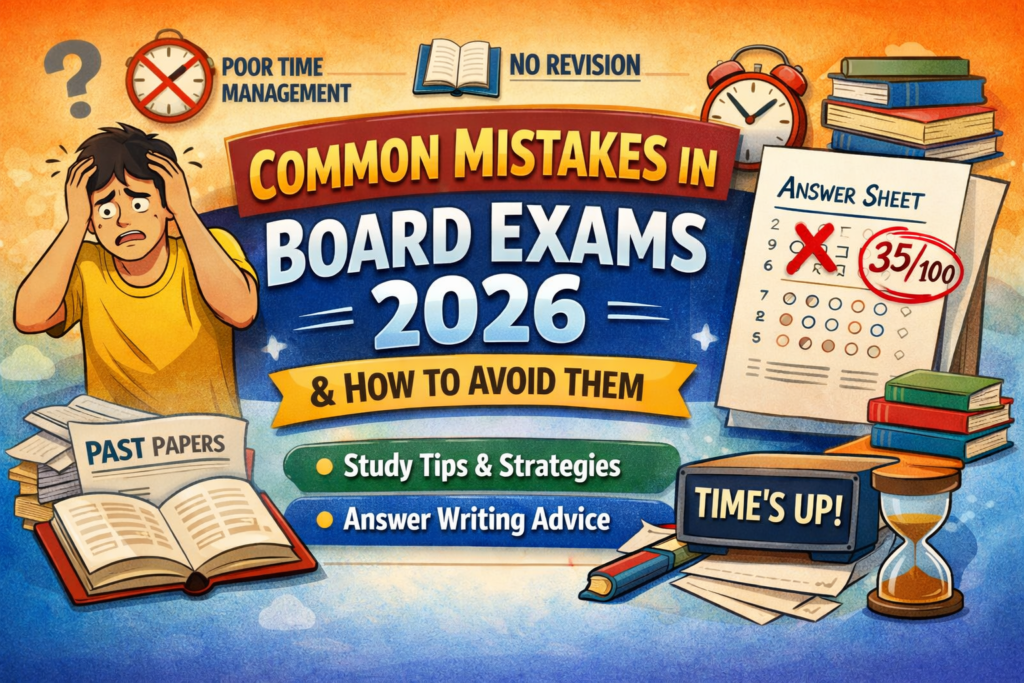
Board exams are an important part of school life of a student. These exams can affect future study choices and sometimes even career plans of the learners. Students read their textbooks, attend classes, and revise their lessons to do well in these exams. However, even after studying a lot, some students do not get the marks they expected. Understanding Common Mistakes in Board Exams 2026 can help students prepare in a smarter way. When students know what mistakes to avoid, they can improve their study habits and exam approach.
Why Students Should Know About Exam Mistakes
Preparing for board exams is not just about finishing the syllabus. Students also need to plan their study time, revise what they have learned, and practice writing answers clearly for the exam. When students understand the Common Mistakes in Board Exams 2026, they can notice what might affect their performance. Learning about some of the common mistakes can help students:
- Improve their study methods
- Organise their preparation in a better way
- Manage exam time more effectively
- Write clearer and more structured answers
Not Following a Clear Study Plan
One common mistake students make is studying without a clear plan. They may simply open their books and start reading different topics without deciding what to study first. When there is no study plan, some chapters may get too much attention while other chapters may be left unfinished. As the exam date gets closer, this can make students feel stressed because many topics are still left to cover.
Students can divide their syllabus into small parts and decide what they will study each day. Furthermore, students who are looking for Board Exam Preparation Tips 2026 may find it helpful to follow a timetable that includes:
- Daily study goals
- Time for revision
- Short breaks between study sessions
Skipping Regular Revision
Another mistake that many students make is that they delay their revision and start learning new topics. Some students focus mainly on finishing the syllabus and believe that they will revise everything just before the exam.
Revision helps the mind remember important information. When students revise topics regularly, they can recall formulas, definitions, and key points more easily. Students preparing for Common Mistakes in Board Exams 2026 should try to revise topics several times. For example, they may revise a chapter a few days after studying it and then review it again after a week. Regular revision can help students feel more prepared and less stressed before exams.
Memorizing Without Understanding the Topic
Many students try to memorise answers exactly as they appear in their textbooks or notes. This method of exam preparation is not good, mainly in subjects that require understanding.
In subjects like mathematics and science, students often need to apply concepts to solve questions. If they only memorise answers, they may find it difficult to answer questions that are slightly different. Students who want to understand how to Score Good Marks in Board Exams should try to understand the concept behind each topic. When students understand the topic clearly, they can explain it in their own words. They can take help from their teachers, friends, and learning videos to understand difficult concepts.
Ignoring Previous Year Question Papers
Some students read their textbooks many times but do not solve previous year question papers. This can be a missed opportunity because past papers show how exam questions are asked. Furthermore, solving previous question papers can help students understand the exam pattern. They can also see which topics appear frequently in exams.
Practising these papers can help students notice Common Mistakes in Board Exams 2026, such as writing incomplete answers or spending too much time on one question. Students may try solving past papers within the same time limit as the actual exam. This practice can help improve the speed and confidence of the students.
Poor Time Management During the Exam
Many students feel that time passes quickly during board exams. They may spend too much time on a single question and later realise that they have little time left for the remaining questions.
Therefore, students may follow a simple strategy for better time management in the board examinations:
- Read the entire question paper before starting
- Begin with questions they know well
- Move to difficult questions later
Writing Answers That Are Too Long or Unclear
Some students believe that longer answers will bring more marks. However, long answers that do not clearly explain the topic may confuse the examiner. Students who follow Board Exam Answer Writing Tips should try to write answers that are simple and well-organised. They can use small paragraphs or bullet points to make answers easier to read.
Further, a clear answer may include:
- A short introduction to the topic
- Important points explained clearly
- Diagrams or examples, if required
Ignoring the Presentation of the Answer Sheet
The way an answer sheet looks can also matter during exams. If handwriting is messy or answers are crowded together, it may be difficult for the examiner to read them. In addition, students should try to write neatly and leave enough space between answers.
Also, important words or headings may be underlined to make them easier to notice. Furthermore, neat presentation can help examiners read answers comfortably. Students who want to improve how to Score Good Marks in Board Exams should remember that clear writing supports their knowledge.
Studying for Too Many Hours Without Breaks
Some students study for long hours without taking any breaks. They believe this will help them complete the syllabus faster. However, studying continuously can make the mind tired. Therefore, taking short breaks between study sessions can refresh the mind. Students may study for around forty minutes and then take a short break before continuing.
Ignoring Health During Exam Preparation
Students sometimes forget to take care of their health while preparing for exams. They may sleep late, skip meals, or sit for long hours without moving. Lack of sleep and poor eating habits can affect memory and concentration. When the body feels tired, studying may become harder. Students preparing for board exams should try to sleep properly, eat balanced meals, and drink enough water. Light exercise or walking during breaks can also help refresh the body.
Final Words
Board exams can feel difficult, but many problems come from habits that students can improve with a little awareness and practice. When students understand Common Mistakes in Board Exams 2026, they can change the way they prepare and build better study habits. Simple steps like making a study plan, revising regularly, solving previous question papers, and writing clear answers can help improve exam performance. These habits can also help students feel more confident and prepared for their exams.
Students who want extra study guidance and learning resources can also explore platforms like HomeShiksha. The platform shares helpful information about exam preparation, study tips, and learning support to help students plan their studies in a better way.
Common Mistakes in Board Exams 2026 FAQs:
What are some common mistakes students make in board exams?
Many students study without a proper plan or leave revision for the last few days. Some also try to memorise answers without understanding the topic. These Common Mistakes in Board Exams 2026 can make exams more difficult.
How can students avoid Common Mistakes in Board Exams 2026 during preparation?
Students can follow a simple study timetable and revise topics regularly. Practising questions and understanding concepts can also help them prepare better.
Are previous year question papers useful for board exams?
Yes, previous papers help students understand the exam pattern and question types. They also help students practice writing answers within the exam time.
How can students manage time during the exam?
Students should read the question paper first and start with the easier questions. This can help them save time and complete the paper more comfortably.
Does neat handwriting matter in board exams?
Yes, neat handwriting helps the examiner read answers easily. Clear and organised answers by the students can leave a good impression during evaluation.
If you are feeling confused about your studies or future choices after board exams, the right guidance can make a big difference. Students and parents can explore professional career guidance through counselling after 10th or counselling after 12th to understand the best stream, courses, and career options based on interests and abilities. With proper guidance and planning, students can make confident decisions about their academic path and future goals.